The vote marks a new step towards the return of democratic rule after the 2021 coup that brought President Mamadi Doumbouya to power.
Seven million voters were eligible to elect 147 members of parliament.
But turnout was reportedly low in the capital Conakry and the central city of Labe. Most candidates were drawn from the presidential camp after the government dissolved the main opposition parties in March.
"I don't even know who to vote for," Mariatou Diallo, 18, told AFP as she cast her first-ever vote in a Conakry suburb. Alassane Barry, a 23-year-old student, said he did not know any of the candidates, calling them "unknown figures."
One opposition party, the Democratic Front of Guinea (Frondeg), which placed second in the presidential election in December with a 6.6 percent vote share, denounced an assault on one of its candidates in the central town of Mamou.
The party said that Abdoulaye Bademba Diallo was "attacked" in a restaurant on Saturday evening "by two hooded individuals" on a motorcycle.
The campaign unfolded peacefully but turnout is key in polls taking place just days after the major religious holiday of Eid al-Adha, when Guineans gather with their families.
Critics urged people to boycott what they called “an electoral farce” that they said would only help establish “a new dictatorship.”
Single force
Doumbouya was elected to a seven-year term presidential term in December facing no serious opposition.
He had initially promised to hand power back to civilians at the end of a transition period.
His government has suspended many political parties, banned protests and arrested opposition and civil society leaders. Enforced disappearances and abductions of dissidents and their relatives have become common.
The Institute for Studies and Security think tank recently warned that political structures are at risk of being "dominated by a single force.”
Africa News of Monday, 1 June 2026
Source: africanews.com
Counting underway after Guinea votes in legislative and municipal elections
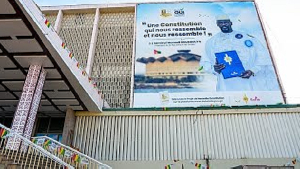 Campaign banner of Mamadi Doumbouya displayed in Conakry