The UK has allocated up to £20 million in new funding to help contain the deadly Ebola outbreak in eastern Democratic Republic of the Congo. The funding will support the World Health Organisation (WHO), the UN, and international and NGO partners to respond rapidly to the outbreak by strengthening disease surveillance, supporting frontline health workers, improving infection prevention and control, and helping affected communities access lifesaving care.
Most confirmed cases are in the Ituri region of eastern DRC, a region already facing significant humanitarian and security challenges.
Alongside this funding, UK humanitarian partners are already responding to contain the outbreak. The UK has been working with leading international humanitarian organisations to support the response. Through the Strategic Assistance for Emergency Response (SAFER) consortium, the UK is pivoting funding to improve water, sanitation, and hygiene systems, ensuring frontline responders and local communities have vital personal protective equipment, and strengthening Ebola containment measures.
The UK is also refocusing efforts to protect maternity facilities and support civil society organisations to strengthen prevention and control measures, as well as mitigate the risk of increased birth complications and sexual violence during the outbreak.
On May 21, 2026, the Foreign Secretary and the Secretary of State for Health and Social Care chaired a cross-government meeting to coordinate the UK’s response to the outbreak, including how to protect British nationals overseas and work with international partners.
UK Foreign Secretary Yvette Cooper said, “It is vital we act now to save lives—outbreaks like Ebola do not stop at borders, and neither can we.”
“This outbreak is a stark reminder that global health threats require a global response. The UK is working hand-in-hand with partners, boosting much-needed funding and sharing technical expertise to contain the outbreak, protect our security, and support those most at risk.”
The UK Health Security Agency (UKHSA) is assessing routes by which travellers enter the UK from the affected countries and will be working with the Foreign, Commonwealth & Development Office, the Department for Transport, and Border Force to ensure information is available on Ebola symptoms and how to access healthcare if unwell. The UK has also updated its travel advice and advises against all but essential travel to some parts of the DRC.
Additionally, UKHSA has activated the Returning Workers Scheme, which aims to protect and monitor the health of individuals travelling from the UK to affected areas for work. Organisations deploying workers to areas where they may be exposed to Ebola are encouraged to register those workers under the scheme.
Dr Mike Reynolds, Incident Director at UKHSA, said: “While the current outbreak of Ebola affecting the Democratic Republic of Congo and Uganda is serious, the risk it poses to the UK population is low. UKHSA continues to monitor and assess the situation closely, and the NHS has safe procedures in place for any such cases and specialist centres where patients can be treated.”
The UK Public Health Rapid Support Team stands ready to activate should requests for support be received from the DRC or Ugandan governments, the WHO, or other partners involved in the response on the ground.
Africa News of Monday, 25 May 2026
Source: British High Commission, Accra
UK steps up support to stop spread of Ebola in eastern DRC
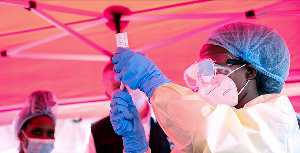 The funding will help the World Health Organisation, UN, international and NGO partners