Stakeholders in health, academia, and finance gathered in Accra, where they called for stronger collaboration, community engagement and sustainable healthcare models to tackle the growing burden of non-communicable diseases (NCDs) across Africa.
This came to light during the CREATE Dissemination Event on Non-Communicable Diseases (NCDs) in Africa and the launch of the Lancet Diabetes and Endocrinology review series, held on April 27, 2026.
Speaking at the event, Professor Henrietta O'Connor, Provost and Deputy Vice-Chancellor of the University of Leicester, highlighted the impact of the CREATE programme, which focuses on reducing the burden of non-communicable diseases in Ghana, Kenya and Mozambique.
According to her, the CREATE model has delivered support to 261 participants across the three sub-Saharan African countries.
“We will showcase outcomes from CREATE, a group focused on reducing the impact of non-communicable diseases in Ghana, Kenya, and Mozambique. Across these three countries in Sub-Saharan Africa, the CREATE model has delivered to 261 participants.
“The programme has trained 10 early-career researchers from Kenya and Ghana through postgraduate studies, 56 community champions through the train-the-trainer approach, and more than 150 healthcare providers and community workers on cardiometabolic disease staging practice and research,” she said.
Professor O’Connor further noted that the initiative aims to create sustainable care models and strengthen local research capacity while building partnerships between African researchers and UK institutions.
“We will highlight efforts to create sustainable care models and strengthen local research capacity in sub-Saharan Africa, as well as train African researchers in partnership with UK institutions.
“This afternoon, we will also launch the three-paper diabetes in sub-Saharan Africa review series published in The Lancet Diabetes and Endocrinology, which will promote the development of a collaborative care model for cardiometabolic diseases in this region,” she added.
Also speaking to the media, Professor Alfred Yawson, Provost of the College of Science at the University of Ghana, stressed the importance of community engagement as a major pillar of the CREATE programme.
He explained that beyond the dissemination event, the programme intends to roll out additional support systems to strengthen awareness and community participation.
“One of the key components of the CREATE programme was to improve strong community engagement and partnership. And therefore, as much as possible, this dissemination, or after this dissemination, there are other support systems that the programme is going to roll out; therefore, encourage and engage as many communities as possible,” he said.
Professor Yawson further called for wider public education through local radio stations and community outreach, noting that many healthcare workers have already been trained to support the initiative.
“We need to disseminate some of this information and do community engagement, talk to local radio stations, and a lot of healthcare workers have been trained to do some of this.
“So going forward, that is what we want to do, and we are hopeful that if this model is adopted and scaled up, it will bring a lot of benefit to our citizens living outside Accra and the many other communities within the country,” he added.
Chief Executive Officer of Korle Bu Teaching Hospital, Dr Yakubu Seidu Adam, noted that the institution would review the lessons from the CREATE research to identify gaps and strengthen future collaborations.
“We will carefully review the experiences from this highly impactful research with a view to identifying and addressing any barriers or weaknesses encountered.
“We will also task the team to explore new opportunities to deepen the strong and mutually beneficial relationship between the University of Leicester, NIHR, and Columbia University Medical Center,” he said.
Dr Yakubu Seidu Adam also called on partner institutions to intensify the dissemination of research findings across the country, especially to encourage healthier lifestyle choices among the youth.
“I will therefore use this opportunity to call on our collaborative institutions to scale up the dissemination of research findings across the country to promote the lifestyle changes necessary to prevent the needless loss of life, particularly among the youth,” he stated.
Managing Director of National Investment Bank, Chief Dr Doli-Wura Seidu Zakaria, also underscored the economic implications of non-communicable diseases, describing them as a major threat to national productivity and development.
“Conditions such as diabetes, hypertension, heart disease, and stroke are no longer distant health concerns. They are realities that affect our families, our workforce, and our economies.
“Beyond the human cost, these conditions pose a serious threat to productivity, lead to increased healthcare expenditure, and ultimately constrain national development,” he said.
He added that the National Investment Bank recognises health as a critical pillar of sustainable economic transformation.
“At the National Investment Bank PLC, we recognise that sustainable economic transformation cannot be achieved without strong human capital and health.
“Therefore, it is not just a social priority to us, it is an economic imperative to our bank,” he added.
AM
President Mahama reacts to Trump White House shooting incident
'I have forgiven her' — Pentecost Chairman responds to Dr Mary Awusi
Africa News of Tuesday, 28 April 2026
Source: www.ghanaweb.com
Diabetes, hypertension now threaten Africa’s economy – Experts warn
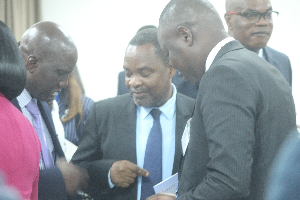 Some of the stakeholders at the event