When the first Mpox case was reported in the country on July 31, 2024, many people assumed it was a disease of truck drivers and sex workers.
This was presumably so, as the first instance was detected at the Taita Taveta one-stop border point in an individual travelling from Uganda to Rwanda.
This assumption went on for far too long, but because of the disease’s high transmissibility, it penetrated the remote villages of the Coast region.
After a few months, persons who had never set foot outside the country or interacted with sex workers started contracting the disease.
Yusuf Mohamed, a teacher at Marimani Comprehensive School in Kisauni, Mombasa County, is one of the people who have recovered from Mpox.
His symptoms started with severe headaches and fever on January 5. He tried to self-medicate using painkillers, but the headaches persisted.
He also developed some skin lesions, forcing him to visit a private facility.
“At the hospital, the doctor told me I don’t have a very big problem and only had a skin infection,” he says.
Yusuf was prescribed some skin cream and tablets for treatment. He used the medication for about five days, and when he did not see any change, he went back to the hospital.
“When I went back and complained of not getting better, the doctor prescribed some injections for three days, but this also did not change my situation,” Yusuf says.
So, he sought help from a dermatologist at another private facility. Here, the doctor diagnosed scabies and prescribed a different cream to apply on the rashes.
“Just two days into using the drugs, the rashes worsened and formed big blisters that spread on the other hand,” Yusuf says.
Upon further inquiries, he was urged to go to Utange Field Hospital for further check-up.
When he arrived at Utange, he was immediately put into isolation and some samples were taken for tests.
After three days, Yusuf tested positive for Mpox. He says the confirmation hit him hard.
“My pressure shot up and, to date, it has never stabilised,” he says.
“I lost sleep for days at the isolation ward because people in Mombasa do not associate Mpox with good deeds.”
After he was declared non-contagious, he was transferred to the general ward with other recovering Mpox patients, where he stayed for another week.
Yusuf describes his diagnosis and treatment period as a roller-coaster of emotions. While he was glad that he was eventually going to receive treatment, he was worried about stigma and the well-being of his family.
“What about my wife, whom I shared a bed with? What about my ailing father, whom I was taking care of?” he asks.
Unfortunately for Yusuf, a few days into his admission to hospital, his father started showing some symptoms similar to Mpox, sending the family into a frenzy. But upon testing, he was found negative.
His family might have been declared Mpox-free and saved from stigma, but Yusuf was still traumatised.
“Some of my friends who came to visit me would not even look at me. They kept their distance and kept reminding me just how much they wouldn’t want to contract the disease,” he says.
Dr Modether Tom, MSF medical activity manager in Mombasa County, said stigma and stereotypes on Mpox are sort of linked to the disease’s comorbidity with HIV.
The infectious disease specialist says the severity of the disease goes higher if the patient is HIV positive and has a low CD4 count.
While Mpox is a viral zoonotic disease whose transmission is caused by direct contact with skin lesions, bodily fluids and respiratory droplets, low body immunity aids its severity.
“When these lesions spread, they are prone to develop secondary bacterial infections and more complications when the immunity is very low,” Tom says.
It is unfortunate that this stigma follows patients after recovery.
“The scars left by the lesions are often very visible. This makes people not want to get closer to them. So the impact of stigma really weighs on them,” Tom says.
Since his arrival six months ago to support the medical team at the facility, all the four patients Tom has lost were HIV positive.
But the stigma is not only on patients. Tom says medical workers, too, have had their fair share.
“Because people know you are a healthcare worker and you interact with sick people, they automatically become afraid that you have contracted the disease and might infect them,” he says.
“This makes them not want to associate with you.”
He says they have strict infection prevention and control measures to protect themselves from contamination.
“We 100 per cent rely on personal protective equipment,” Tom says.
“This means we have to wear masks, isolation gowns and gloves before coming into contact with the patients.”
And these PPEs also have to be changed in between patients.
SYMPTOMS AND CASES
The World Health Organisation lists the symptoms of Mpox as: rashes, fever, sore throat, headache, muscle aches, back pain, low energy and swollen lymph nodes.
“The Mpox rash often begins on the face and spreads over the body, extending to the palms of the hands and soles of the feet,” WHO says on its website.
“It can also start on other parts of the body where contact was made, such as the genitals.
“It starts as a flat sore, which develops into a blister filled with liquid that may be itchy or painful. As the rash heals, the lesions dry up, crust over and fall off.”
Data from the Ministry of Health shows the country has confirmed 1,034 cases of Mpox.
The February 20 report by the National Public Health Emergency Operations Centre says, so far, 16 people have died.
It says males account for 50.5 per cent of the deaths and females, 49.5 per cent.
Some of the top affected counties include Mombasa with 413, Nairobi (160), Busia (107), Makueni (82), Kilifi (38), Kiambu (35), Nakuru (29), Murang’a (23), Homa Bay (14) and Taita Taveta (13).
Mpox vaccinations were conducted last year on targeted populations only, following the limited supply. The report says a total of 10,697 people have been vaccinated in Mombasa, Nakuru and Busia counties.
The Utange facility is one of the isolation centres the Ministry of Health is using to manage the outbreak in partnership with organisations such as MSF.
Tom says as soon as a patient arrives at the facility, they are triaged in the isolation ward.
Here, the clinicians physically examine them and take their medical history, including HIV status, to help determine if the patient fits the case definition for Mpox.
The assessment also helps with contact tracing, he says.
“From there, we go ahead with collection of samples. Then we do home assessments to investigate a bit more about the type of house the patient lives in and how many people he lives with,” Tom says.
“This also helps to determine whether the patient should be admitted or put on home-based care.”
Tom says the first step towards Mpox management is symptomatic treatment.
“This means if the patient is in pain, even for the itching, we prescribe antihistamines,” he says.
For the lesions on the limbs, they advise not to apply any ointment but to expose them to open air to dry and heal faster.
But for lesions in the oral cavity, they give specific medications to clear the wounds.
And if the wound is in the genital area, they advise patients to do a sitz bath (a warm, shallow bath used to soothe, cleanse and increase blood flow to the perineal and anal area) in warm water with salt.
Some patients develop abscesses and cellulitis. In such conditions, small surgical procedures are conducted to drain the abscess.
For patients with comorbidities such as HIV, diabetes and hypertension, the treatment plan includes all the diseases.
“We don't have any specific antiviral for Mpox, although some countries have already approved some new antiviral treatment,” Tom says.
“But currently, we manage the skin lesions and treat the complications as they emerge.”
Africa News of Thursday, 2 April 2026
Source: the-star.co.ke
Mpox myths collapse as virus spreads to ordinary Kenyans
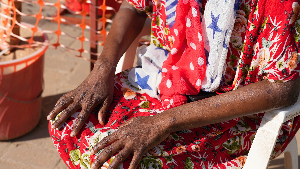 Mpox scars on a recovered patient