The US has announced it will classify Sudan’s Muslim Brotherhood as a foreign terrorist organisation from March 16, placing the country’s military government in a precarious position.
Washington accuses the Brotherhood of orchestrating violence against civilians, obstructing peace efforts and maintaining ties with Iran’s Revolutionary Guard Corps. The move could further isolate Sudan’s junta and expose its links to remnants of Omar al-Bashir’s regime.
The decision could place the movement in the same category as al-Qaeda, ISIS and other extremist groups designated by the US. But it may prove awkward for the military government of Abdel Fattah al-Burhan, whose junta has close associations with known Brotherhood members and offshoots from the Bashir era.
Bashir was ousted in 2019 after a popular uprising. But after the military sidelined the civilian protest movement, his associates gradually returned to the system.
Their hardline stance has made it harder for the Sudanese Armed Forces (SAF) to engage the rival Rapid Support Forces (RSF) in dialogue, prolonging a war that has killed more than 100,000 people and displaced over 15 million others.
Adding the Muslim Brotherhood in Sudan to the terrorism list also highlights alleged Iranian links to the war. The US said Iran’s Revolutionary Guards had trained, and potentially armed, Brotherhood fighters who then used violence against civilians, undermining efforts to resolve the conflict and promoting extremist ideology.
In the statement released on Monday, the US State Department said: “The Sudanese Muslim Brotherhood uses unrestrained violence against civilians to undermine efforts to resolve the conflict in Sudan and advance its violent Islamist ideology.
“Its fighters, many receiving training and other support from Iran’s Islamic Revolutionary Guard Corps (IRGC), have conducted mass executions of civilians.”
The Sudanese Muslim Brotherhood’s al-Baraa Bin Malik Brigade was designated in September 2025 for its role in Sudan’s war.
Both the RSF and the SAF have been sanctioned by Western governments over alleged crimes against humanity and war crimes. But Burhan has often portrayed himself as the legitimate authority in Sudan while depicting the RSF as a terrorist militia.
The designation could also draw scrutiny over alleged links between Sudanese Islamist fighters and Iran, a relationship Washington and Israel have been seeking to counter.
“As the world’s leading state sponsor of terrorism, the Iranian regime has financed and directed malign activities globally through its IRGC. The United States will use all available tools to deprive the Iranian regime and Muslim Brotherhood chapters of the resources to engage in or support terrorism,” the State Department said.
The junta did not immediately comment on the sanctions. The RSF welcomed the decision, saying it “reflects a growing international awareness of the immense suffering endured by the Sudanese people in recent years.”
“This decision is not just a political step but a moment of recognition of the pain carried by thousands of Sudanese families who have lost their sons and loved ones,” the RSF said in a statement.
The Civil Democratic Alliance of Revolutionary Forces, also known as Somoud, also welcomed the decision to classify the Muslim Brotherhood in Sudan as a terrorist organisation, including the Sudanese Islamic Movement and its armed wing, the al-Baraa bin Malik Brigade.
In a statement issued by its Political Communication and Foreign Relations Committee, the coalition said the US decision could help curb violence and recruitment of fighters.
Somoud said the decision reflects the will expressed during Sudan’s 2019 revolution and urged countries and regional and international organisations to take similar steps to hold those responsible for crimes accountable and support the peace process in Sudan.
Africa News of Tuesday, 10 March 2026
Source: thecitizen.co.tz
US blacklists Sudan's Muslim Brotherhood, puts Burhan junta on the spot
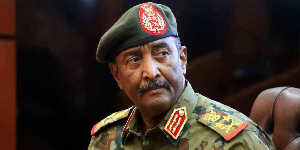 Sudan's top army general Abdel Fattah al-Burhan



Entertainment