Fears that South Sudan - the world's youngest nation - could plunge into a full-blown civil war have intensified as fighting continues in Jonglei state, north-east of the capital, Juba.
Government forces are trying to retake territory from those loyal to First Vice-President Riek Machar, who has been suspended from his post after being accused of plotting to overthrow President Salva Kiir.
Machar is currently on trial in Juba, on charges of murder, treason, and crimes against humanity, which he denies.
His party, the Sudan People's Liberation Movement/Army In Opposition (SPLM/A-IO), has denounced the charges as a "political witch-hunt" and a move to "dismantle" a 2018 peace accord that ended a five-year civil war.
What is happening in Jonglei?
The SPLM/A-IO and allied groups have said they have been capturing territory, including military bases, in Jonglei and other states since the end of last year.
South Sudan's army responded with a ccounter-offensivelaunched last month.
In a controversial statement, deputy army chief Gen Johnson Oluny urged his troops to "spare no-one" including "children, the elderly, and civilians," when they were deployed to Jonglei.
The government has clarified that this was not an order, saying it is committed to protecting civilians.
The recent fighting in Jonglei has forced at least 280,000 people to flee their homes.
Facilities run by aid agencies, including clinics, have been looted and staff beaten up, according to the charity Oxfam.
What's behind the fighting?
South Sudan, one of the world's poorest countries, gained independence from Sudan in 2011 after decades of fighting led by the Sudan People's Liberation Movement (SPLM).
Just two years into independence, a civil war erupted when Kiir dismissed Machar as vice-president, accusing him of plotting a coup.
The ensuing conflict, largely fought along ethnic lines between supporters of the two leaders, resulted in an estimated 400,000 deaths and 2.5 million people being forced from their homes - more than a fifth of the population.
As part of the peace deal, Machar was reinstated as vice-president within a unity government that was meant to pave the way for elections.
While the current conflict in Jonglei is driven primarily by national political rivalries, the state has long been a hotspot for inter-communal violence, particularly between sub-clans of the Dinka and Nuer.
Cycles of violence linked to cattle raiding, land access, political representation, and revenge attacks continue to shape and complicate the current conflict.
The SPLM/A-IO draws much of its core support from Nuer communities, while the government and its allied forces are dominated by Dinka leadership. As a result, national political confrontations often reignite unresolved local grievances, increasing the risk of communal violence.
Why is there tension now?
The current crisis was sparked in March last year when the White Army militia, which was allied to Machar during the civil war, clashed with the army in Upper Nile state and overran a military base in Nasir.
The,n on 7 March, a UN helicopter attempting to evacuate troops came under fire, leaving several dead, including a high-ranking army general.
Nearly three weeks later, Machar and several of his associates were placed under house arrest. They were accused of trying to stir up a rebellion.
"The prospect for peace and stability in South Sudan has now been put into serious jeopardy," Oyet Nathaniel Pierino, deputy leader of SPLM/A-IO, said at the time.
Rather than defusing tensions, the government struck again, hitting Machar with a slew of charges - including treason, the ultimate crime against the state - in September.
Days later, his party ratcheted up the pressure, denouncing Kiir's government as a "dictatorship" and demanding "regime change".
What about the 2018 peace deal?
While Machar's inclusion in the unity government was a key part of the agreement, other parts of it have not been implemented.
The key issue for many South Sudanese is the security arrangement.
The deal outlined how former rebel forces and government soldiers would be brought together into a unified national army made up of 83,000 troops. The remainder were supposed to be disarmed and demobilised.
But this has not happened, and there are still lots of militias aligned to different political groups.
The deal also outlined the establishment, with the help of the African Union, of a court meant to try the perpetrators of the violence. But this has not been created, in part because those holding some of the top positions in government are reluctant to set up something that could see them put on trial.
Elections that were supposed to happen in 2022 have still not taken place, and neither has a new constitution been drawn up.
An attempt to revive the peace process by Kenyan mediators is being made.
Under what is known as the Tumaini Initiative - tumaini is Swahili for "hope" - the plan is for talks to be held in Kenya aimed at laying the groundwork for credible elections.
What is the problem between Machar and Kiir?
While Kiir and Machar, both in their 70s, were part of the SPLM that fought for independence, long-standing tensions exist.
These have been fuelled by ethnic divisions - Kiir is Dinka, while Machar is Nuer - and competing political ambitions.
When Kiir sacked Machar in 2013, triggering the civil war, Machar denounced him as a "dictator".
Creating further problems between the two are the repeated postponements of elections.
Polls have been delayed four times, leaving Machar unable to fulfil his presidential ambitions while perceptions grow that Kiir intends to be president-for-life.
Who is Riek Machar?
Born in 1953, the 72-year-old was the 27th son of the chief of Ayod and Leer and was brought up in the Presbyterian Church.
As an undergraduate, he studied mechanical engineering at the University of Khartoum, and in 1984 earned a PhD in philosophy and strategic planning at the UK's Bradford University.
He switched sides on several occasions during the battle to secede from Sudan, as he sought to strengthen his position and that of his Nuer ethnic group.
He became vice-president of South Sudan at independence in 2011. Machar was sacked in 2013 and then reinstated as part of a deal in 2016, but then fled as fighting resumed.
Who is Salva Kiir?
Born in 1951, the 74-year-old devout Roman Catholic was the son of a cattle herder and the eighth of nine children.
At 17, he joined the Anyanya, one of the rebel groups that was fighting for southern independence during the First Sudanese Civil War in 1967. Sixteen years later - in the Second Sudanese Civil War - he was one of the five founding members of the Sudan People's Liberation Army/Movement.
The former rebel commander, who specialised in military intelligence, was seen as a moderate within the SPLM and became its leader in 2005 after the death of John Garang in a helicopter crash.
He became president of South Sudan on independence and has remained in that position for 14 years,s as no elections have taken place.
How bad could things get?
Last year, Nicholas Haysom, head of the UN mission in South Sudan, warned that the country was "teetering on the brink of a return to full-scale civil war", which would devastate the nation still dealing with the aftermath of the last conflict.
There are concerns that a return to fighting could lead to "proxy warfare in the region", according to Daniel Akech, an analyst at the Crisis Group think-tank.
Any conflict would have two main consequences, he added. "First, the two sides will stoke ethnic grievances... as they seek to mobilise supporters and ready them for combat. Secondly, a flare-up in South Sudan is likely to draw in the country's neighbours."
The leaders of the members of the regional grouping Igad - including Uganda - are supposed to be the guarantors of the 2018 deal.
Some Ugandan troops have been deployed to the country as part of what South Sudan's government said was a long-standing agreement to support the army.
Africa News of Wednesday, 11 February 2026
Source: bbc.com
A simple guide to the crisis in South Sudan
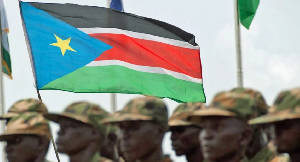 The world's youngest nation has witnessed little peace over the last 14 years