AFC/M23, the rebel group controlling parts of eastern Congo, says South Africa’s decision to withdraw from the United Nations Organisation Stabilisation Mission in the Democratic Republic of Congo (Monusco) is welcome, arguing that the mission has “failed”.
On Sunday, South African President Cyril Ramaphosa notified the UN Secretary-General that Pretoria is pulling out its troops from Monusco, where it has served for 27 years.
Monusco was established to support the 1999 Lusaka Ceasefire Agreement, as conflict persisted in the DRC. Its mandate expanded to protecting civilians, humanitarian personnel, and human rights defenders, and supporting government stabilisation and peace consolidation efforts.
In January, Mr Ramaphosa said the unilateral withdrawal was driven by the “need to consolidate and realign the resources of the South African National Defence Force (SANDF), following 27 years of South Africa’s support to UN peacekeeping efforts in the DRC”.
Speaking to journalists in Goma on Monday, M23 leader Bertrand Bisimwa said South Africa had little to show for its long deployment and described the
decision as “a very responsible” one.
“When South Africa got involved in the mission, it was to help resolve the security issues that were present then. When Monusco came in, we had 43 armed groups in eastern DRC, but now we have more than 350, which means, clearly, Monusco has failed. So why should South Africa stay in a mission that has failed?” Mr Bisimwa posed.
He said when the United Nations Force Intervention Brigade (FIB) was formed, M23 “decided to withdraw and go into exile in 2013 to let the brigade deal with the armed groups”.
“When we came back in 2017, we found more than 200 groups, and Monusco was living with them. If you look at history, you will see that the only armed group the FIB dealt with was the M23. And even when you look at the recent fighting in Goma, Monusco was supporting the armed groups, including FDLR (Democratic Forces for the Liberation of Rwanda), instead of disarming them.
“At that time, South Africa was part of SAMIDRC (Southern African Development Community Mission in the Democratic Republic of Congo) that was supporting the armed groups. South Africa had been part of FIB, so if it now wants to leave, it’s because it has realised their failure. And I think they’re doing this to let Congolese manage their own conflict,” Mr Bisimwa said.
Firepower legacy
Over the past 27 years, South Africa has been deeply involved in peace efforts in eastern Congo. As part of the FIB, it provided the Congolese government forces with significant firepower, helping drive M23 out of Goma in 2013 after the rebels briefly captured the city in late 2012. The SANDF battalion in the FIB, backed by Rooivalk attack helicopters, played a central role.
SANDF would again take a leading role against M23 in 2023 after the DRC expelled the East African Community Regional Force (EACRF), which had spent a year attempting to create a buffer between the rebels and government forces, FARDC, and allied militias.
Kinshasa was dissatisfied with the East African force, accusing it of failing to defeat M23 and instead favouring a political approach.
The DRC then turned to the Southern African Development Community (SADC), requesting a similar multinational force with a combat mandate. An Extraordinary SADC Summit on May 8, 2023, approved the deployment of SAMIDRC, which officially deployed on December 15, 2023.
Tanzania, Malawi, and South Africa contributed troops. However, on March 13, 2025, a SADC summit resolved to end SAMIDRC’s mandate after M23 captured Goma, eastern Congo’s largest city, in a rapid advance.
As the city fell, many SAMIDRC troops sought refuge in UN peacekeeping bases.
Support for the SADC force had been weak from the outset. The mission struggled due to low troop contributions and limited resources, undermining its mandate to help the DRC government “neutralise negative forces and armed groups in the eastern DRC”.
The withdrawal also followed an agreement between SADC and the East African Community (EAC) that a political rather than military solution was more viable.
The deployment came at a cost. At least 13 South African soldiers were killed during the M23 assault in eastern Congo.
Pretoria has said that while it is exiting the UN mission, South Africa will maintain close bilateral relations with the DRC government and continue supporting multilateral peace efforts led by SADC, the African Union, and the United Nations.
The government said South Africa would work with the UN to finalise timelines and modalities for the withdrawal.
Last year, the UN extended Monusco’s mandate to December 20, 2026, maintaining an authorised ceiling of 11,500 military personnel, 600 military observers and staff officers, 443 police personnel, and 1,270 formed police unit personnel.
Africa News of Tuesday, 10 February 2026
Source: thecitizen.co.tz
M23 hails South Africa's Monusco exit as 'responsible' after 27 years
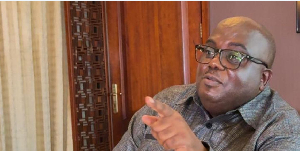 M23 leader Bertrand Bisimwa addresses journalists in Goma on February 9, 2026