President Dr Julius Maada Bio of Sierra Leone has warned that terrorism and violent extremism in West Africa have reached a dangerous stage, where armed groups are no longer merely testing states but are actively seeking to dismantle them.
He stressed that fragmented and reactive responses were no longer acceptable.
President Bio made the remarks at the Summit of Heads of State and Government, held as part of the High-Level Consultative Conference on Regional Cooperation and Security in Accra, aimed at strengthening collective responses to insecurity in West Africa and the Sahel.
He noted that more than half of all terrorism-related deaths worldwide now occur in the region, describing the situation as a global emergency that cannot be addressed by any single country acting alone.
According to him, behind every terrorist incident are displaced families, traumatised communities, violated women and girls, and young people drawn into cycles of violence.
President Bio, who also chairs the ECOWAS Authority of Heads of State and Government, said the human cost of insecurity is being exacerbated by poverty, weak institutions, climate shocks and declining regional cohesion.
He added that the region must be honest in admitting that its responses have too often been fragmented, reactive and constrained by hesitation.
“This moment demands coordinated and decisive action,” he said, thanking President John Dramani Mahama of Ghana for convening leaders at a critical time to close what he described as a dangerous gap in regional security cooperation.
The Sierra Leonean leader said intelligence sharing, mobility, logistics and coordinated operations are essential, not optional, stressing that strengthening regional cooperation is imperative for both regional and international peace and security.
Brigadier (Rtd) Dr Bio warned that if West African states fail to act together, insecurity will continue to define the region’s future.
He said the crisis requires a unified and coherent response anchored in sustained cooperation within the Economic Community of West African States (ECOWAS) and engagement with neighbouring states, including Mauritania and Algeria.
Acknowledging political tensions and transitions in parts of the region, President Bio insisted that geography makes dialogue and cooperation unavoidable.
He therefore called for efforts to bridge trust and coordination gaps between ECOWAS, the Alliance of Sahel States and neighbouring countries, noting that despite emerging alliances, countries cannot choose their geography.
He reaffirmed Sierra Leone’s commitment to sustained diplomatic engagement at both regional and international levels.
President Bio urged stronger alignment of existing regional security mechanisms, warning that fragmentation and overlap continue to undermine effectiveness.
He cited initiatives such as the Accra Initiative, the Multinational Joint Task Force, the Nouakchott Process and other counter-terrorism platforms, saying they must be better coordinated and adequately resourced to deliver results.
He called for the ECOWAS Conflict Prevention Framework to be fully operationalised and funded without delay, arguing that institutional weaknesses continue to limit the region’s capacity to respond decisively to emerging threats.
Emphasising intelligence cooperation, he called for improved interoperability, real-time intelligence sharing and stronger border management.
President Bio said terrorist networks thrive on illicit economies involving arms trafficking, human trafficking and narcotics, urging intensified cooperation with international partners, including Interpol, Afripol and the Financial Action Task Force, to disrupt these networks.
He added that stronger customs enforcement and border controls are essential, pointing to regional border cooperation frameworks as practical models that should be supported and replicated.
He also called for greater use of regional and international platforms that support capacity building in criminal justice, counter-terrorism and prison management.
Drawing on his background as a former military officer, President Bio cautioned against overreliance on force alone, saying military action must be matched with governance reforms, service delivery and economic recovery.
He said terrorism thrives where the social contract has broken down, poverty is entrenched and institutions fail, leading citizens to lose faith in the state.
According to him, rebuilding trust through inclusive development, strong institutions and respect for the rule of law is the most effective defence against radicalisation.
President John Dramani Mahama, who chaired the summit, said Ghana convened the meeting to begin forging a shared consensus towards making the sub-region safer, despite recent political and security challenges within ECOWAS and the emergence of the Alliance of Sahelian States.
He said although the sub-region has experienced difficulties and realignments, countries remain bound by geography and a shared destiny, warning that division would only weaken collective security.
“Together we stand, divided we fall,” he said.
President Mahama cautioned that failure to establish an effective framework for cooperation against violence, extremism and terrorism would allow insecurity to spread unchecked across the region, likening it to a cancer that could consume countries one after another.
He described the summit as an informal but important first step towards building a platform for renewed engagement and cooperation.
According to him, the meeting was intended to lay the foundation for a new framework acceptable to all states to confront violent extremism and terrorism threatening lives, property, economies and development.
Africa News of Saturday, 31 January 2026
Source: GNA
West Africa facing global terror emergency - President Maada Bio warns
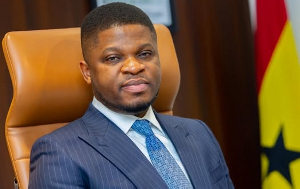
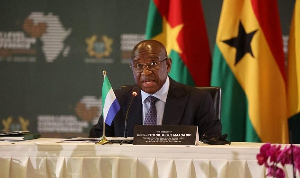 President Dr Julius Maada Bio of Sierra Leone



Entertainment
Van Vicker 'slaps' LilWin with GH¢10m defamation suit
Opinions