Five years after trading officially began under the African Continental Free Trade Area (AfCFTA), the agreement is still struggling to take full effect.
Since its launch in January 2021, progress has been slowed by uneven implementation, persistent non-tariff barriers, weak infrastructure, and wavering political commitment to harmonise national trade policies.
On the positive side, AfCFTA membership has grown to 49 countries.
In 2022, participating states launched the Pan-African Payment and Settlement System, enabling cross-border transactions in local currencies – a key step in facilitating intra-African trade.
Countries have also submitted tariff schedules, exemptions, and services commitments, laying the groundwork for trade in goods and services.
Decisive Factor
However, experts say infrastructure remains the decisive constraint.
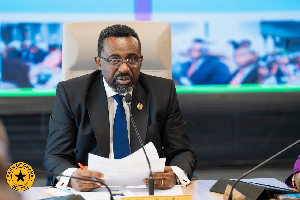
“With 49 countries now ratified, the AfCFTA is gaining political traction, but infrastructure will determine its success. Without infrastructure, there’s no AfCFTA. That’s how important it is,” said Tsotetsi Makong, Director of Coordination and Programmes at the AfCFTA Secretariat in Accra.
He described trade and infrastructure as “Siamese twins, noting that both hard infrastructure – roads, ports, and electricity – and soft infrastructure, such as regulations and systems, are essential.
Africa’s transport and logistics deficit remains severe. Poor road, rail, and port connectivity, high shipping costs – sometimes accounting for 30 percent to 40 percent of export values for perishables – and reliance on foreign shipping lines continue to constrain intra-African trade.
“We need to deal with the infrastructure gaps. According to the African Development Bank, Africa faces an annual infrastructure deficit of $70 billion to $110 billion,” Dr Makong said during the virtual Africa Prosperity Dialogues 2025 last week.
“We must close this gap – electricity, roads, and services –
because goods move through roads and transactions need reliable systems.”
Gabby Asare Otchere-Darko, Executive Chairman of the Africa Prosperity Network, said the AfCFTA cannot function without what he termed the “six pillars of movement”: people, goods, services, capital, innovation, and culture.
“If we can’t get these six moving, then we can’t have a single market,” he said, adding that full participation by all 55 countries is not required for progress, citing the Economic Community of West African States and the East African Community as examples.
Although 54 African Union members have signed the agreement, fewer than 10 have fully operationalised it domestically. Integration into national legal, customs, and regulatory systems remains slow and uneven.
Rules of Origin remain a major bottleneck. While agreement has been reached on 92 percent of goods, negotiations on sensitive sectors such as automotive and textiles are still unresolved.
“The majority of Rules of Origin have been agreed upon, but the outstanding rules for the automotive and textile sectors are holding back full implementation,” said Adrian Njau, acting chief executive of the East African Business Council.
The AfCFTA’s goal of eliminating 90 percent of tariffs is not expected to be achieved until 2034.
Government fears
For businesses, uncertainty persists. The Guided Trade Initiative, launched in 2022, was intended to test AfCFTA frameworks and promote commercially meaningful trade. Products included tea, coffee, ceramic tiles, batteries, processed meat, sugar, pasta, and sisal fibre. Eight countries – Cameroon, Egypt, Ghana, Kenya, Mauritius, Rwanda, Tanzania, and Tunisia – participated initially.
In practice, however, non-tariff barriers such as excessive documentation, arbitrary border fees and inconsistent standards often proved more restrictive than tariffs. In one case, a shipment from Kenya to Ghana reportedly transited through Singapore and Dubai, taking six months.
More than 39 countries are now trading under the initiative, but hesitation remains. Some governments fear revenue losses or being outcompeted by larger economies such as Nigeria and South Africa.
* The AU Assembly adopted Phase II Protocols in 2023 and 2024, covering investment, intellectual property, competition policy, digital trade, and women and youth in trade; these now require
ratification.
* Countries do not need to wait for ratification to align domestic laws and institutions with the Investment Protocol.
* The protocols define members’ rights and obligations, allowing time for preparatory reforms.
* While the framework allows for progressive tariff elimination on up to 97 percent of tariff lines, addressing non-tariff barriers remains
critical.
* For SMEs, key obstacles include limited trade information, unclear export and import procedures, high fees, and difficulty meeting regulatory standards such as health and safety certification.
Africa News of Friday, 19 December 2025
Source: theeastafrican.co.ke
Why Africa's free trade dream remains stalled, five years on
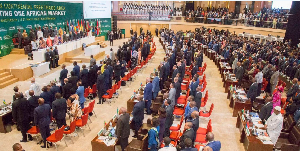 African delegates during an AfCFTA meeting in Kigali, Rwanda on March 21, 2018