Congolese President Félix Tshisekedi is facing yet another political test after a key ally in parliament was accused of mismanagement, a potential reason to eject him from the post.
Vital Kamerhe, Speaker of the National Assembly, is fighting allegations of incompetence and mismanagement raised by MPs, who have signed a petition to remove him from office.
The petition also targets four other members of the Lower House. While the official reason given is “mismanagement and incompetence,” there are other, deeper, unspoken reasons behind Kamerhe's woes: Alleged divided loyalty.
That is because, unlike other leaders of the presidential majority, he doesn’t stand out against criticism of former president Joseph Kabila, who has been attacked by nearly everyone in the President’s kitchen Cabinet.
Jean-Pierre Bemba, Deputy Prime Minister for Transport and President Tshisekedi’s right-hand man has accused Kabila of linkages with the Congo River Aliance (AFC), a rebel movement that includes M23. President Tshisekedi has called Kabila the “real boss of the AFC rebels.”
Zacharie Bababaswe, an associate of President Tshisekedi, says that Kamerhe “has made many mistakes that are politically unforgivable” and that “we must not continue to give him more opportunities”.
But at the start of the new parliamentary session on September 15, Kamerhe reiterated his loyalty to President Tshisekedi.
Sources said he has been trying to reach out to the head of state to save him. He even publicly asked for forgiveness from the MPs who want to remove him from office, but his fate seems to have been sealed.
The MPs, especially Chrispin Bindule, a former member of Kamerhe's UNC party, told his former party boss that they would not forgive him.
Some analysts predict legal proceedings once the Speaker is removed from his position. Yet Kamerhe has been here before. In 2009, as a senior member of Kabila’s party, he was forced to resign as Speaker after publicly denouncing a Rwanda-Kabila agreement for a joint operation by the Congolese and Rwandan armies against the Rwandese genocidaire forces, FDLR.
Later in 2020, Kamerhe was sentenced to 13 years in prison for embezzlement of public funds and was acquitted after more than a year in prison.
Even if he were to go against the president, Kamerhe would have little impact, as the president has an overwhelming majority in the Lower House.
But the rift would mark a turning point: Kamerhe and Tshisekedi signed a deal in Nairobi in 2018 binding Kamerhe to support Tshisekedi's presidential bid then in exchange for a similar deal for Kamerhe in 2023. Tshisekedi ran again in 2023.
But, having served two terms, Tshisekedi would be barred from running in 2028, the next available year of elections.
This is another factor explaining the turmoil in the National Assembly, according to opposition leaders.
Olivier Kamitatu, a former Speaker of the National Assembly and now spokesperson for opposition leader Moïse Katumbi, accused President Tshisekedi of attempting “to tailor the Constitution to his own needs.’'
Kamitatu alleges a plot to "change the constitution, remove term limits, abolish the position of prime minister, and establish a seven-year presidential term.”
“The president from the majority party would then be assisted by a vice-president. The ticket is already written: Tshisekedi and Jean-Pierre Bemba. First, remove Vital Kamerhe, the natural heir apparent -- the obstacle -- then pass the law," he said.
Earlier this year, President Tshisekedi stated his intention to change the constitution without saying whether he intended to run again.
But the issue is not simple, especially in the context of the ongoing war in eastern Congo.
Africa News of Thursday, 18 September 2025
Source: theeastafrican.co.ke
Why Tshisekedi allies want House Speaker Kamerhe out
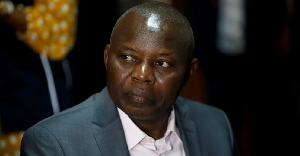 Vital Kamerhe is Speaker of Congo’s National Assembly