The Democratic Republic of Congo (DRC) is mourning the loss of nearly 200 lives after two overloaded boats sank in Équateur Province in the north-west of the country.
However, this has also prompted public anger regarding the poorly enforced regulations surrounding water transport
Last week, two deadly shipwrecks occurred within two days. On the evening of September 11, a boat caught fire and capsized in the Congo River in Lukolela Territory, 122km from Mbandaka, killing more than 100 people.
Just a day earlier, another shipwreck 150km away had already claimed at least 86 lives, according to the official tally two days later.
On September 10, at nightfall, an overloaded and dilapidated whaling boat departed from the river port of Basankusu, heading up the Maringa River towards the town of Waka.
According to sources within the civil society community, the accident occurred when the boat collided with other vessels, including motorised canoes travelling in the opposite direction.
The nearly 200 deaths in two days mark a devastating toll, underscoring the dangers of navigating the Congo’s rivers and lakes — where many families lose loved ones.
In June this year, at least 40 people died in three shipwrecks on a lake in the north-west of the country. Dozens remain missing to this day.
These disasters are primarily caused by overloading, the poor condition of boats and ferries — many of which date back to the colonial era — and the lack of navigation aids on the waterways.
Tragically, it has become routine for travellers to perish in rivers or lakes in the DRC almost every month, particularly on the Congo River — Africa's second largest — and in lakes in the east, north-west and west of the country.
In October 2024, 126 people lost their lives in a shipwreck on Lake Kivu in eastern DRC, according to the government's figures. However, some sources estimated that the death toll exceeded 500, as the ferry was carrying around 700 passengers, yet fewer than 50 were rescued.
Following this accident, the Deputy Prime Minister for Transport, Jean-Pierre Bemba, announced a ban on boats lacking life-saving equipment. Yet this measure remains poorly enforced due to limited oversight.
In eastern DRC, private investment has introduced modern ferries on Lake Kivu, offering safer and more reliable transport. But in the west and north, the collapse of the National Transport Office three decades ago has left the sector in ruins. Old, poorly equipped, and overloaded wooden boats now carry passengers at great risk.
Clémence Auzary, a river transport expert, explains: “Boats are overloaded because we’re forced to maximise the profitability of each trip and move as quickly as possible.
"It’s an extremely competitive economic system — brutal, with no real room for manoeuvre. And navigation by barge or safer metal boats has completely collapsed.”
The DRC — often referred to as a “country-continent” due to its vast area of over two million square kilometres — lacks sufficient roads and railways to connect its provinces. Waterways offer an alternative, but modern boats are scarce.
“The only choices are precarious boats,” Auzary notes, “which dominate because they’re inexpensive, more flexible, and better suited to navigating the small waterways that large metal barges can’t access. So we’re in an economy that favours small, fragile, flexible — and dangerously unsafe— vessels.”
She adds that many Congolese cannot afford plane tickets, and air connections between provinces are equally rare.
Africa News of Tuesday, 16 September 2025
Source: theeastafrican.co.ke
Deadly Congo boat disasters spotlight lax transport rules
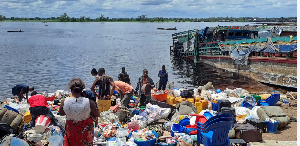 People gather among the belongings of passengers from a capsized boat on the Congo River