Queen Boresah Nkigiwurche of the great Gonja Kingdom of Savaanah Ghana,has emphasized Ghana’s commitment to strengthening local governance by ensuring traditional authorities play a more structured role in national development.
She noted that Africa’s approach to managing historical and cultural institutions within governance frameworks could offer valuable lessons for the continent.
She made it known during all African traditional leader's conference hosted by the kingdom of Eswatini where she chaired the group three session.
She added that Exploitation has hinder Africa’s development– in response to the low statistics of African developments and the danger this poses to the socio-cultural and economic development of Africa.
Experts and eminent speakers identified ways to address the disturbing issue and are using the Conference for African Traditional Leaders to bring dreams come alive.
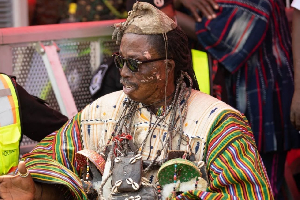
Some of the Kings and queens who attended the conference that was described as groundbreaking, included Zolani Mkiva, the Secretary General for the Congress of Traditional Leaders of South Africa (CONTRALESA), Princess Kana of Burundi, Namboka Ireneo, Chief Dr Wallace Williams, who is also an ambassador and Queen Boresah Nkigiwurche of the great Konja Kingdom of Savaanah.
In his address, delivered to delegates by Prince Guduza, the King of Eswatini said the Kingdom of Eswatini was honoured to host what he described as a ‘rebirth’ of African governance, where ancestral systems would no longer be sidelined but recognised as key pillars of unity, peace and prosperity.
“We are here to safeguard our sacred cultural heritage, preserve our indigenous knowledge, promote peace and reconciliation, and drive community development,” he said, adding that the forum represented ‘a beacon of hope’ for the African Union and the global stage.
The traditional leaders met in the kingdom to seek the King of Eswatini, King Mswati’s support in representing their collective interests at the African Union.
Their request reflects a long-standing desire for formal recognition of indigenous governance structures, which many argue continue to command legitimacy at the grassroots level despite decades of marginalisation after independence.
King Mswati III echoed this aspiration, pointing out that Eswatini had chosen a different path in 1968 by retaining its monarchy and traditional governance. This decision, he said, had given the nation stability and resilience.
Therefore, their mission is joining hand with other African traditional leaders and together they will act as a unifying figure and voice for traditional leaders, whose powers have been diminished or entirely removed by modern political systems.
Delegates seek to in future engage in structured deliberations on the role of traditional governance in Africa’s renaissance, the historical impact of slavery and colonial disruption and the establishment of a continental body for traditional leadership.
Their discussions will lay the groundwork for the 2026 Traditional Leaders' Summit, where formal recommendations will be presented for continental endorsement.
Africa News of Thursday, 11 September 2025
Source: Frank Owusu Obimpeh, Contributor
Ghana joins Eswatini to champions traditional leadership in modern governance reforms
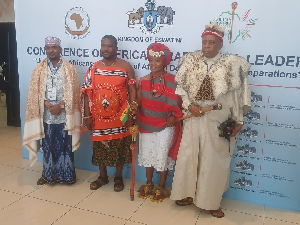 Some of the Kings and queens who attended the conference