Ethiopia says it hopes to avoid confrontation with Egyptian troops, who are preparing to join Somalia’s AU-backed foreign mission against Al-Shabaab, even as it warned it will be uncomfortable with any overreach.
It was long expected that Egyptian forces would join the African Union Support and Stabilisation Mission in Somalia (Aussom) after receiving the necessary approvals from the continental body. However, their presence appears to cause unease, even though they will be there to fight the common enemy alongside other troop contributors.
Ethiopia’s ambassador to Somalia, Suleiman Dedefo, told state TV in Mogadishu that Addis Ababa expects no provocation for which he said they would respond in kind.
“We are not scared; we are not threatened by the presence of Egyptian forces – as long as they don’t try to challenge our forces,” he said. “I am sure that kind of thing will not happen.”
Dedefo spoke after some Egyptian troops completed their training to join Aussom in Mogadishu. The Somali Ministry of Defence said the completion marked Egypt’s “growing role in supporting stabilisation and security efforts in Somalia”.
“This step underscores Egypt’s strong commitment to supporting Somalia’s security and strengthening the capacity of the Somali National Army through the new Aussom framework,” the Ministry said.
For Somalia, however, Egypt is just one international partner. It said that “to defeat the al-Shabaab and ISIS terrorist groups”, it needs support from all of the African Union and international partners.
Which is why Ethiopia’s stance is important. For more than a decade, Ethiopia and Egypt bickered over something else: The waters of the Nile. Ethiopians raised funds and built the Grand Ethiopia Renaissance Dam (GERD), a 6GW power plant, when in full operation. Addis Ababa has invited regional leaders to an official launch in September, even though power production began in 2023.
But it is a project that has caused Cairo a lot of irritation. Egypt first tried to stop the project but failed. It then threatened to attack it, but did not. Then it agreed to a US-led mediation, which didn’t go far after parties failed to agree on the declaration of principles, especially on timelines to fill the dam. Ethiopia proceeded with filling the dam, arguing that this would not prevent Cairo from receiving an adequate supply of water.
The Nile waters make 98 percent of Egypt’s water sources. As such, Cairo considers the Nile a national security issue. Yet Nile Basin countries, including Ethiopia, which contributes the largest share of the water volume, have bulging populations that need electricity and water for themselves. The problem of how to share the Nile without causing friction has largely arisen in the basin, especially because Egypt insists on a colonial agreement that was made at a time when some of the countries in the region didn’t exist.
Although Somalia is not a Nile Basin country, the dispute between Egypt and Ethiopia has sometimes involved Mogadishu. When Egypt first agreed to send troops to Aussom, Mogadishu said that Ethiopia would not be part of Aussom, which evolved from the African Union Mission in Somalia (Amisom). Contributors to the Atmis mission included Ethiopia, Kenya, Djibouti, Burundi, and Uganda. However, as the transition period drew to a close, Mogadishu and Addis Ababa found themselves embroiled in a dispute over a controversial memorandum of understanding that Ethiopia signed with Somaliland in January 2024 to lease a naval base. Somalia was angered because Somaliland is internationally recognised as part of Somalia and is therefore incapable of signing such a deal. Somaliland, for its part, has declared unilateral independence and sought recognition for the last 32 years, but without success.
The dispute was resolved through mediation by Turkey, a country with significant interests in both Ethiopia and Somalia.
However, the issue of Egyptian troops and their relationship with Ethiopian forces was never publicly discussed. Currently, Atmis troop contributors, except Burundi, have remained in Aussom.
Ethiopia previously called for comprehensive consultations with key stakeholders before the Aussom operation involving 11,900 personnel kicks off.
For now, the Somali and Ethiopian militaries have resolved to work together and share intelligence in the face of a common enemy – al-Shabaab. Earlier this year, the Ethiopian army chief, Birhanu Jula, visited Mogadishu, where he agreed with his counterparts on the deployment of the Ethiopian National Defence Force (ENDF).
Africa News of Thursday, 28 August 2025
Source: theeastafrican.co.ke
Ethiopia on alert as Egyptian forces plan entry into Aussom
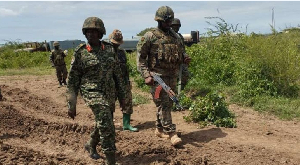 African Union troops in Somalia