The treason case against Tanzanian opposition leader Tundu Lissu has been postponed again to August 18, pending a district court’s order on whether the trial should be livestreamed or not when it begins at the High Court at a later date.
Magistrate Franco Kiswaga said during Tuesday's mention of the case at the Kisutu Resident Magistrate's Court in Dar es Salaam that committal proceedings for the case to be formally shifted to the High Court would begin right after he has given the order based on a request brought up by the prosecution.
According to chief state prosecutor Nassoro Katuga, the request to bar livestreaming, which has been a popular aspect of the case's preliminary proceedings, was part of the witness protection procedures being set up for the eagerly awaited trial.
But this argument was strongly challenged by Lissu, who is defending himself in the case where he faces a death sentence if found guilty.
He said that the move to prevent his case from being livestreamed once it goes to trial, after allowing it throughout the preliminary proceedings, would be tantamount to conducting the trial "in the dark so that the wider public doesn't know what's going on".
The case, springing from Chadema's demands for reforms in the electoral system to ensure the October election is conducted in a free, fair and transparent manner, has captured international attention in the run-up to Tanzania's October 29 general election, amid concerns that it is politically motivated.
Lissu was arrested in early April as he led the reforms crusade and has been remanded in jail ever since, while the party was barred from participating in this or any other local election for the next five years.
His date at the Kisutu court on Wednesday was originally earmarked for the trial committal proceedings, but ended up marred by heated arguments between the accused and the state prosecutors over the livestreaming issue.
At the centre of the exchanges was an August 4 High Court ruling that gives prosecutors the go-ahead to set up comprehensive witness protection measures to protect the identities of witnesses during the trial.
Judge Hussein Mtembwa's ruling was issued under Clause 194 of Tanzania's Criminal Procedures Code, which touches on witness protection in cases that have a bearing on national or public security.
It will allow civilian witnesses of Tanzanian nationality to give testimony from behind a wooden screen along with non-disclosure in court of their names, addresses, whereabouts and other personal details that could reveal who they are.
The ruling also prohibits media outlets from publishing, broadcasting or disseminating witness details.
The Director of Public Prosecution, in its request submitted to the High Court, said it was based on "serious" concerns over the safety of some witnesses, their close relatives and associates if they were publicly identified, owing to the case involving a prominent political figure with a large following of extremist supporters.
It did not elaborate on that.
Prosecutors said that the High Court ruling also covered livestreaming of court proceedings, which Lissu, in his counter-argument, described as a "deliberately twisted" interpretation of the ruling's provisions to force a secret trial.
"Nowhere in the ruling is it stated that television cameras should be switched off," Lissu said. "It may provide room for witnesses to be given false names to protect them, but it doesn't stop public access to the proceedings altogether. In essence, these measures are not to protect witnesses but to hide them. There is a difference. It is what I have been fearing all along, that the aim is to turn this trial into a kangaroo court and make a sham of the entire proceedings."
Africa News of Thursday, 14 August 2025
Source: theeastafrican.co.ke
Prosecution wants livestreaming banned in Lissu treason trial
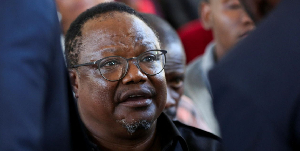 Tanzanian opposition Chadema party leader Tundu Lissu in court