Amid growing public outcry over alleged misconduct by Chinese nationals in Zimbabwe, Beijing has issued a rare and strongly worded advisory urging its citizens to respect local laws, uphold community values, and avoid environmentally harmful or controversial practices.
The move follows a series of incidents that have strained relations between Chinese investors and local communities, including a recent fatal shooting involving a Chinese mine supervisor.
Beijing’s embassy in Harare released the notice following public outrage over the recent shooting of a local man by a Chinese supervisor in eastern Zimbabwe.
The embassy’s rare advisory, titled “Important Notice to Chinese Nationals: A Reminder on Investment and Business Operations in Zimbabwe”, appeared to acknowledge the growing rift.
It urged Chinese citizens to “conduct thorough due diligence and risk assessment before investing” and to “adhere strictly to Zimbabwean laws and regulations.”
Chinese investors were also advised to “avoid involvement in any ventures that might lead to controversies or disputes.” The notice emphasised that “the storage and use of any legally authorised firearms must be managed with the highest level of control and in full compliance with relevant regulations”—a likely response to the increasing number of Chinese nationals accused of shooting local employees.
“In the event of criminal incidents such as theft, burglary, or robbery, while ensuring your personal safety, your immediate priority is to report the incident to the local police without delay,” the notice read.
“Should the police be unreachable or unable to dispatch officers immediately, you should remain calm and composed, and try to avoid any direct confrontation.”
Chinese nationals were further urged to “build trust through community and environmental stewardship, promote fair labor practices, and comply with environmental laws.”
“Act as a partner in Zimbabwe's development. Wherever possible, engage with local communities respectfully and responsibly,” the notice added.
“Corporate social responsibility initiatives are strongly encouraged as visible expressions of goodwill. Such proactive efforts foster mutual trust, strengthen community relations, and affirm a shared commitment to Zimbabwe’s broader economic development and social progress.”
The advisory also warned against engaging in bribery and corruption, which the embassy noted are criminal offenses in both China and Zimbabwe. It encouraged nationals to report “any instances of solicitation or extortion” to the authorities.
The Centre for Natural Resources Governance (CNRG), an organisation that researches and documents the impact of mining on communities across Zimbabwe, said Chinese nationals have operated with impunity for too long.
“We emphasise that the shooting of Fungai Nhau, which prompted this response, is not an isolated incident but part of a growing pattern of criminal activities by Chinese nationals that have gone unpunished,” CNRG stated, referring to the shooting incident.
“Their quick resort to firearms against unarmed Zimbabwean citizens has sparked a national debate on how a country with such strict gun laws allows so many foreign nationals to acquire weapons.”
“This propensity for violence and the impunity they seemingly enjoy have led to rising anti-Chinese sentiment throughout Zimbabwe.”
While CNRG welcomed the embassy’s statement as “a giant step in the right direction,” it stressed that more action is needed to rebuild trust between Chinese nationals and Zimbabwean citizens. The organisation called for improved dialogue between the Chinese embassy and affected communities.
“We recognise that much of the responsibility for reforming the extractive sector rests with the government of Zimbabwe,” CNRG added.
Zimbabwe has seen explosive growth in its Chinese population in recent years, as the country becomes one of Beijing’s most favored investment destinations in Africa. China now dominates Zimbabwe’s mining industry, while sectors such as agriculture and construction are also popular among Chinese investors.
Chinese business owners often clash with local labor unions, which accuse them of mistreating employees. The government is frequently criticised for turning a blind eye to these abuses, fearing it might jeopardise relations with the global superpower.
In July, a senior Zimbabwean government official issued a rare rebuke of Chinese nationals, accusing them of violating labor and environmental laws and engaging in illicit financial activities.
Tafadzwa Muguti, a senior official in President Emmerson Mnangagwa’s office, surprised delegates at a conference on Chinese investment in Harare by warning investors to desist from “illicit financial activities, environmental harm, and disregard for local laws.”
Read: Zimbabwe arrests Chinese national who pointed gun at employee
Zimbabwe remains one of the most receptive African countries to Chinese investment, especially following over two decades of Western isolation triggered by a violent land reform program that displaced white farmers.
In 2024, the Zimbabwe Investment Development Agency recorded 441 new investments from China totaling $2.75 billion, compared to 56 investments worth $52.28 million the previous year.
Chinese President Xi Jinping designated Zimbabwe an “all-weather friend” in 2015—a title granted to only 14 countries worldwide. Since then, China has heavily invested in Zimbabwe’s energy, construction, agriculture, and mining sectors.
China has also financed and undertaken major infrastructure projects, including power stations, airports, roads, and hospitals. However, the growing influence of the world’s second-largest economy has become increasingly polarising in Zimbabwe.
Africa News of Friday, 17 October 2025
Source: theeastafrican.co.ke
China urges nationals in Zimbabwe to respect local laws amid rising tensions
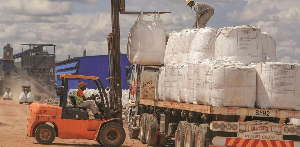 Workers load lithium concentrate at Prospect Lithium mine in Goromonzi, Zimbabwe, on Jan. 9, 2024