Joseph Kabila ruled the Democratic Republic of Congo (DRC) for 18 years, during which he suspended the death sentence in the country. But now, he faces the hangman’s noose, convicted of murder, war crimes, rape, treason, conspiracy against the state, and incitement.
The High Military Court in Kinshasa handed down the verdict on Tuesday, having tried him in absentia. That decision has, however, ignited political controversy.
“The death sentence handed down to President Joseph Kabila further weakens the country,” said Jean Claude Katende, a human rights activist in the DRC.
In addition to sentencing the former head of state to death, the court also ordered his immediate arrest.
Kabila, who led the DRC from 2001 to 2019, was also ordered to pay over $30 billion in damages to the country and to the provinces of North Kivu and South Kivu in eastern DRC, where a rebellion has displaced millions of people and rendered most state activities defunct.
The decision stems from a resolve by President Felix Tshisekedi in a bid to deal with the M23 rebel movement with finality, at least according to the government.
In 2024, the DRC lifted its moratorium on the death penalty, more than 20 years after suspending its application. It targeted murderers, traitors, terrorists, and those planning to kill a head of state. Still, no condemned prisoner has been executed, yet, according to official records.
In Kinshasa, Kabila is recognised by the High Military Court as the leader of the AFC/M23 rebellion. The court also found him complicit in ties with Rwanda—a country the DRC, the United States, and France have long accused of supporting the AFC/M23 rebel group, based on several reports by United Nations experts.
Rwanda has denied the charges, but Kinshasa and Kigali have since signed a peace deal to address the question, mediated by the US.
The court relied on past statements made by Kabila, a report from the United Nations Joint Human Rights Office (UNJHRO), testimony from a close associate of Kabila, and the account of Eric Nkuba, an M23 member sentenced to death and currently held in Kinshasa.
According to Nkuba, Kabila was plotting with Corneille Nangaa, leader of the AFC/M23, to overthrow President Félix Tshisekedi. AFC is the Congo River Alliance (Alliance Fleuve Congo), the political wing of the M23 rebels.
The movement’s leaders were also previously sentenced to death in absentia by a military court, and the group was declared a terrorist movement with which the government cannot negotiate.
However, under the mediation of Qatar, Kinshasa has been sending representatives to meet M23 for a possible political peace deal. The verdict, originally scheduled for September 12, was postponed after civil parties requested a reopening of the investigation. They promised new evidence, including witnesses who were expected to demonstrate financial links between Kabila and the AFC/M23.
However, the witnesses failed to appear at the final hearing. The case, therefore, relied on previously submitted evidence, including statements from Kabila and his associates, and the alleged testimony of a man presented as a close associate of the AFC/M23 leader.
Supporters of the former president have denounced the trial as judicial abuse and political persecution. Ferdinand Kambere, deputy permanent secretary of the PPRD (Kabila’s now-suspended party), expressed his dismay:
“It’s very sad to hear that Joseph Kabila is on trial. It always makes me laugh. An entire regime against an innocent citizen who has done so much for this country. A trial simply because he returned via Goma to live in his villa. What has he done to deserve death?”
In the DRC, former presidents, like sitting ones, enjoy legal immunity. But the Congolese parliament lifted this protection on Kabila, exposing him to trial.
Read: DRC court sentences ex-President Kabila to death for treason, war crimes.
In May, when Kabila returned to Congo via Goma—a city controlled by the M23 in the east—Kinshasa authorities interpreted this as further proof of his leadership in the rebellion. Kabila had stated his intention to contribute to peace efforts in the DRC.
Before arriving in Goma, he declared he was “coming out of retirement... in view of the situation our country is going through.”
Now, these developments appear to be pushing the possibility of peace and reconciliation further out of reach.
“The Congo does not need show trials, but reconciliation, peace, and stability. The conviction of former President Joseph Kabila is an aberration that further weakens our country and divides rather than reconciles. Peace and stability cannot be built on hatred or political trials,” said Francine Muyumba, a former senator close to Kabila.
Emmanuel Shadary, permanent secretary of the PPRD, added, “We knew what was going to happen. The clear intention of the dictatorship in power is to eliminate and neutralise a major political figure who has become indispensable in the face of the chaotic situation in this country. We believe that this theatricalisation of Congolese politics has gone beyond what is acceptable.”
Kabila’s conviction coincided with a UN Security Council meeting on peace efforts in the DRC. During the meeting, Bintou Keita, the UN Secretary-General’s representative in the DRC, stated that “the Doha talks have resumed... but peace is slow to materialise on the ground.” Despite ceasefire commitments, sporadic fighting continues daily in eastern Congo, undermining the peace process.
At present, the warring parties risk entrenching their positions, pushing peace further away—even though it once seemed within reach. Olivier Kamitatu, spokesperson for opposition leader Moïse Katumbi, said, “With the death sentence handed down to Kabila, the Rubicon has been crossed.”
Barnabé Kikaya, an adviser to Kabila, commented, “Joseph Kabila is being sentenced to death for allegedly being the leader of the AFC-M23, while at the same time negotiations are being held with the same AFC-M23 in Doha. The world is watching us. The future depends solely on us.”
The court’s decision marked a legal milestone — adding an influential leader to a group facing the death penalty. But it may as well politically divide the country at a time when it seeks to address endless security crises.
Africa News of Saturday, 4 October 2025
Source: theeastafrican.co.ke
Why Kabila’s conviction could muddle the search for peace in eastern Congo
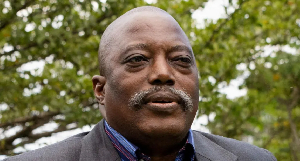 Former Democratic Republic of Congo President Joseph Kabila