The All-Share Index (ASI) crashed by 5.01 per cent to close at 141,327.30 points, marking what analysts at CardinalStone described as “the steepest decline since 2010.”
Market capitalisation fell below the ₦90 trillion mark to ₦89.88 trillion (around $58.9 billion).
Heavy sell pressure hit blue-chip stocks, including Dangote Cement and MTN Nigeria, both of which tumbled by 10 percent, alongside BUA Cement (-10.00 percent), Aradel Holdings (-9.67 percent), and Guaranty Trust Holding Company (-7.69 percent).
“This wasn’t a broad-based panic,” noted analysts at Cowry Asset Management, who attributed the fall to “concentrated institutional selling and large block trades.”
Out of over 60 losing equities, only four stocks managed to close in the green: NCR Nigeria (+9.82%), Berger Paints (+2.56%), FCMB Group (+0.96%), and AXA Mansard Insurance (+0.25%).
The day’s trading was unusually active, with total volume surging by 80.03 per cent to 656.95 million units, while the value of transactions soared by 158.86 per cent to ₦29.39 billion (about $19.3 million).
FBN Holdings dominated trading volume with 68.3 million shares, while Geregu Power Plc led in value, accounting for ₦4.4 billion ($2.9 million) worth of trades.
Every major sector closed deep in negative territory. The Industrial sector led losses with an 8.55 percent drop, followed by Banking (-7.27%), oil and gas (-4.65%), Insurance (-4.33%), and Consumer Goods (-2.20%).
Analysts warn that the sharp correction could unsettle investor confidence in the short term, particularly among foreign portfolio investors who are wary of liquidity risks and naira volatility.
Analysts say the sell-off reflects a wider loss of confidence amid currency pressures and macroeconomic uncertainties.
The market is now testing its resilience in a fragile economy still searching for post-reform stability.
The shockwaves on the NGX also echo a broader global shift in investor sentiment, as capital flows increasingly retreat from frontier markets to safer assets amid rising global interest rates and geopolitical risks.
Nigeria’s market, often seen as a barometer for sub-Saharan Africa’s economic health, may continue to face turbulence until investor confidence steadies across emerging and frontier economies.
Africa News of Wednesday, 12 November 2025
Source: africa.businessinsider.com
Nigeria's stock market suffers biggest fall since 2010
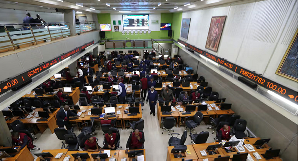 Employees work at computer terminals on the trading floor at the Nigerian Stock Exchange (NSE)








Opinions