Health and fitness experts have called for urgent reforms to curb the rising fatal and other life-threatening incidents in Ugandan gyms and military recruitment exercises. The experts indicated that the incidents highlight critical safety lapses like inadequate health screenings and poor emergency preparedness.
The recent death of 22-year-old Solomon Dono, who collapsed and died during a UPDF recruitment in Apac District on August 15, despite on-site medical aid, joins a troubling pattern that includes businessman Abas Kasagga’s alleged fatal heart attack in a Kampala gym in April.
Kasagga was pronounced dead upon arrival at Kibuli Hospital, a nearby facility where he was rushed to. These are not isolated cases. Mustafa Katende’s 2018 gym collapse and the death of Margaret Kabasa during a fitness test in Pallisa in May all highlight the magnitude of the problem.
Many exercise-related incidents are unreported because they are not fatal. “As physiotherapists, we usually take exercises as medicine. Just like medicine, you take it according to what is affecting you,” explains Mr Isaac Kakooza, former president of the Uganda Association of Physiotherapy (UAP), now with Mobile Phyzio Uganda.
Mr Kakooza emphasises the importance of understanding one's health status before starting a fitness routine.
“There are specific types of exercises which each individual is supposed to do depending on their fitness level,” he says, adding:“Some people get these kinds of problems (attacks), because sometimes they don't go into that length of finding out their state of health.”
The physiotherapist paints a scenario where individuals with pre-existing conditions like high blood pressure or heart problems might unknowingly exacerbate their situation through ill-advised exercise.
“When someone goes to the gym, the gym first of all is supposed to have a professional who can, for example, take the person's blood pressure,” Mr Kakooza asserts.
“Someone could be having high blood pressure… when you do exercise, your blood pressure also goes up, (meaning the condition can worsen). This means you are not supposed to be doing certain types of exercise,”Mr Kakooza says.
Col David Opeero, the head of the UPDF recruitment team in Apac District, in comments about the death of Dono, says they always do preliminary health checks before the fitness drill and have a robust emergency response system and team, which tried to rescue Dono.
“During the run, one of the participants collapsed. He was put in the ambulance that was following them, the way we evacuate any other participant who faints in the run,” he explains.
“He was brought to the hospital, first aid was administered to him, unfortunately, he didn't make it, he died.” Col Opeero further explains that in the recruitment process, ideally there are four stages.
“The first one is to identify and confirm that we have the right people who are short-listed, then document verification,the third one is the preliminary physical check done by the medical officers, then the fourth one is the short run, and eventually the medical examination,” he says.
Dr Charles Oyoo Akiya, the commissioner for Non-Communicable Disease Control and Prevention at the Ministry of Health, highlights how one can exercise safely.
“First of all, do a general fitness check by a qualified health worker, know your general health status: heart condition, blood pressure, blood sugar, and so on,” he says.
“Secondly, ensure the gym is safe and the equipment is in good mechanical condition. Thirdly, a qualified/ licensed or professional instructor is available to guide you. And forth, first aid services are handy, including emergency referral systems,” he adds.
Mr Kakooza says weightlifting, although essential in muscle strengthening, greatly strains the cardiovascular system (heart and blood pathways), causing a significant concern that should be balanced well with health safety.
Danger signs
“When you're lifting something heavy or exerting a lot of force, your body will demand energy. And then when it demands too much energy, of course, it goes hand in hand with demanding more oxygen, and by that, your heart will be required to pump or to overwork so that it can supply that kind of blood. And if it's overworking beyond its limits, of course, anything can happen to you,” he explains.
Mr Kakooza stresses the significance of recognising one's limits during exercise. The point of panting, he explains, should allow for continued conversation. Reaching a level where breathlessness prevents speech is a danger sign, indicating an intensity that might be too high.
“When you're doing exercises, you can reach a point when you're panting. That panting has to be at a certain level where you can pant, but while you can still talk.
But when you reach a level where you pant and you cannot even talk, you're just trying to catch your breath, that's not a good intensity level,” he says. “If you're so fatigued so quickly at a simple exertion during an exercise, it's good to go for a check-up to see why your body demands so much oxygen and you're not taking it in the way it is required.
Usually, it's good to first see a cardiologist and see whether there's any problem,” he adds. The physiotherapist also advises seeking medical check-ups for persistent fatigue during simple exertion, as it could signal underlying health issues. The absence of mandatory health screenings and professional guidance in many gyms is a worrying trend.
“When they go to these gyms, they don't even ask those things, they just all of a sudden jump on something and they just start doing without anyone asking them these, without anyone measuring their blood pressure,” Mr Kakooza laments. UAP, has long advocated for stricter regulations within the fitness industry.
“It would be good for each gym to have a physiotherapist supervising it. Just like you see pharmacies are supervised by pharmacists. So gyms are also supposed to be supervised by physiotherapists,” Mr Kakooza advises.
He points to the recent regulation by the National Council of Sports mandating physiotherapists in sports clubs, highlighting their crucial role in guiding training, preventing injuries, and managing emergencies.
Echoing the need for greater oversight, Dr Akiya acknowledges that gyms are largely private entities regulated by the Ministry of Tourism, Wildlife, and Antiquities. Dr Akiya also reminds the public that physical activity doesn't solely rely on gyms.
Simple activities like walking, jogging, dancing, and sports can be equally beneficial and accessible. For gym owners, Dr Akiya’s message is clear: “They must employ professional instructors, physiotherapists, first aiders, etc., and ensure a safe environment within their gym facilities.”
Africa News of Thursday, 9 October 2025
Source: monitor.co.ug
How to protect yourself from gym hazards
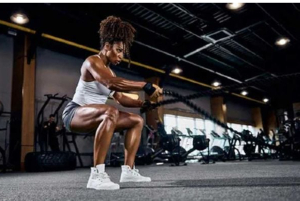 Absence of mandatory health screenings and professional guidance in many gyms is a worrying trend