A year since Germany and Kenya signed a labour migration deal, Berlin says it has eliminated jobseekers who might pose a risk and are not qualified to live and work in the European country.
However, Nairobi has also praised the deal for providing job opportunities for skilled Kenyans, some of which are remote positions in Germany.
Germany signed the deal with Kenya to assess the admission of skilled and semi-skilled labourers, as then-Chancellor Olaf Scholz faced mounting pressure to reduce the flow of illegal migrants, which had fuelled far-right nationalist politics.
n Tuesday, a joint committee on the implementation of the Comprehensive Partnership Agreement on Migration and Mobility met in Nairobi.
Neither side indicated how many Kenyans could benefit from the programmes, but Nairobi estimated that up to 200,000 Kenyans could enter Germany for work, study, or training. It turned out that these figures were also available to other countries that had signed similar deals with Germany, meaning that the available jobs would be highly competitive.
Other countries that had reached similar deals with Germany included India, Morocco, Moldova, Kyrgyzstan, Ghana, the Philippines, Colombia, Uzbekistan and Georgia.
A year later, Germany feels that the deal has worked to some extent by reducing the number of unwanted Kenyans.
Sebastian Groth, the German ambassador to Kenya, said that more visas had been issued, more training opportunities had been granted, and more Kenyan students were now in Germany.
“A good start, but we must grow opportunities further and ensure young talents aren’t exploited by unethical recruiters,” he said.
Ethical recruitment has meant that fewer Kenyans have been duped into paying fees for job placements. Under the new system, only registered agencies can recruit, and they cannot charge for it. Furthermore, recruitment is limited to individuals with specific skills, such as proficiency in the German language.
Although officials have not published data on the number of Kenyans who have benefited from the programme, a source said that nurses and truck drivers have been among the most commonly recruited Kenyans under short-term job placements.
Last year, when the deal was signed, around 15,000 Kenyans were living or working in Germany, making it one of the most important Western countries for the Kenyan diaspora after the US and the UK. Around 812 Kenyans had overstayed their visas or violated their residence conditions, and were due to be deported.
Previously, deportations were complicated because Kenyans either had expired passports or claimed to have lost them. However, the new arrangement allows German authorities to deport Kenyans using national IDs or expired passports.
On Tuesday, a report stated that officials generally considered the agreement a success in filling vacancies in Germany's shrinking work-force without putting pressure on migration policies.
“Both sides are focusing on organic growth in legal migration in the areas of work, education and training. To this end, language acquisition and targeted training are to be further intensified in order to give young Kenyans, in particular, the opportunity to fulfil the criteria of the German Skilled Immigration Act,” a joint communique signed by the two parties said.
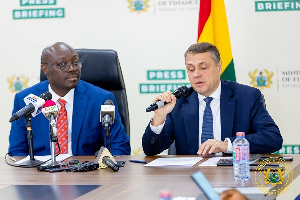
Kenya’s Diaspora Principal Secretary Roseline Njogu led the Kenyan delegation while the German ambassador led his side. Labour and Skills Development PS Shadrack Mwadime was also present.
“Both delegations agreed to expand the matching process, particularly between German SMEs and Kenyan employees. To this end, the players on both sides will be networked even more closely, and attention will be paid to the high quality of cooperation.”
Ministries on both sides will continue to hold discussions on available opportunities. According to the latest data, there are opportunities in 22 different sectors open to Kenyans.
Last year, President William Ruto stated that a migration and labour mobility agreement would utilise Kenya's human capital, as well as improving remittances from Kenyans working abroad.
"We can combine the innovation, creativity, energy, talent, and knowledge of our young people with German investment, technology, and resources and provide for a win-win outcome," he said in Berlin during his visit in September 2024.
Africa News of Wednesday, 27 August 2025
Source: theeastafrican.co.ke
How Germany-Kenya labour deal helps filter out unwanted migrants
 Kenya’s Diaspora Principal Secretary Roseline Njogu and German Ambassador to Kenya Sebastian Groth