Widely described as a de facto abolitionist on account of having carried out its last executions in 2005, when an unspecified number of soldiers met their death by firing squad, Uganda presents as an oddity insofar as the death penalty is concerned.
When a resolution on a moratorium on the death penalty came up for voting at the UN General Assembly in December 2014, the country registered as an abstainer. Yet sitting on the fence has not always been the predisposition of its octogenarian President. Speaking to the subject in 2016, President Museveni’s audience came away with the belief that he was stronger than ever in the conviction that the Mosaic Law is difficult to fault.
“I believe in punishing those who make very serious mistakes, especially killing,” he said, adding, “There is no harm if the killer is hanged when he has repented. I have not hanged many people, but that possibility should be left open.”
At the end of 2023, the number in question stood at about 145. This represented a steep drop from a little over 1,000 inmates who were reported to be on death row in 1999.
Ggaba daycare killings: Street boy tells court Okello asked him to mobilize children. The court told the accused to ask a child witness to help coordinate other minors
Justice Alice Komuhangi Khaukha’s ruling on Thursday, which condemned an unremorseful Christopher Okello Onyum to the gallows for slaughtering four toddlers at a daycare in the leafy Kampala suburb of Ggaba, will, in many respects, put Uganda’s leader since 1986 on the spot. Not since April 1999 have civilian executions taken centre-stage in the country. A decade after those civilian hangings, the highest appellate court in the country ruled that mandatory death sentences were unconstitutional. Also, added the Supreme Court, prisoners who have spent more than three years on death row should have their sentences commuted.
Why is the aforementioned ruling important?
The ruling explains how John Sanyu Katuramu, Tooro Kingdom’s former premier, was reprieved. He was a prisoner under sentence of death until the case of Susan Kigula and 417 others led to, one, the abolition of the mandatory death penalty in Uganda, and, two, having sentences of convicted killers on death row commuted.
In September 2001, after gavelling the court to order, Justice John Bosco Katutsi handed Katuramu a death penalty for financing the murder of Prince Happy Kijanangoma and Stephen Kaganda, the royal’s personal minder. The victory that Kigula and others scored in court could, as such, be one of the ways the noose around Onyum’s neck is loosened.
Should the convicted murderer not be executed within the first three years of his time in prison, his sentence will be commuted to life (i.e., a 20-year jail sentence). The other way the noose could be loosened is if, like
Chris Rutimbirayo Rwakasisi, Onyum, becomes a beneficiary of a presidential pardon.
How many convicts have been executed in Uganda?
Prison records show that there have been at least 377 legal executions by hanging since 1938. Hanging, a colonial-era penal provision, is the official method of execution for civilians in Uganda. There have been 51 court-ordered executions on President Museveni’s watch. The vast bulk of those executions came on April 27, 1999, when 28 death row inmates were executed by hanging.
The most high-profile inmate executed was Musa Sebirumbi, a former Uganda Peoples Congress (UPC) chairman and National Security Agency (NASA) operative. Sebirumbi had spent a decade on death row after Justice Alikipo Ouma convicted him on five counts of murder following events that transpired in Kikandwa Village, Semuto, on June 9, 1981. During Idi Amin’s rule between 1971 and 1979, court-ordered executions totalled 71.
Africa News of Saturday, 2 May 2026
Source: monitor.co.ug
Death sentence in Uganda explained
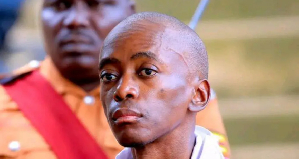 Prime murder suspect Christopher Okello Onyum