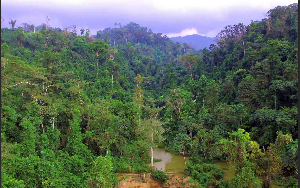
Authorities in the Democratic Republic of the Congo on Monday
declared the end of the Ebola outbreak in Kasai Province, 42 days
since the last patient was discharged from a treatment centre, ending
The 16th time epidemic has hammered the country.
Dr Samuel Roger Kamba, Minister for Public Health, Hygiene, and Social
Welfare in the DRC said scientific data had shown that there had been
no new infections from the epicentre, which usually confirms the end
of an outbreak.
“On behalf of the government, and taking into account all the
scientific and operational indicators confirming that the chain of
transmission of the virus has been broken — I hereby officially
declare the end of the 16th Ebola outbreak in the Democratic Republic
of the Congo,” he said in a statement.
On September 4, Kinshasa had declared a new outbreak in Kasai, the
third time in the province, with previous cases experienced in 2007
and 2008. Some 64 cases (53 confirmed, 11 probable) and 45
deaths were recorded in the outbreak. The DRC has seen cycles of
Ebola outbreaks have occurred since 1976 when the virus was first reported.
After over two months, authorities say they collaborated with the
World Health Organisation (WHO) and other partners to halt the spread
of the virus in the Bulape Health Zone, a rural community in Kasai in
the central region.
A total of 112 WHO experts and frontline responders were deployed
to support the national authorities in the response, and
over 150 tonnes of medical supplies and equipment were delivered to
protect health workers and communities.
“Controlling and ending this Ebola outbreak in three months is a
remarkable achievement. National authorities, frontline health
workers, partners and communities acted with speed and unity in one
of the country’s hard-to-reach localities,” said Dr
Mohamed Janabi, WHO Regional Director for Africa, in a statement on
Monday.
“WHO is proud to have supported the response and to leave behind
stronger systems, from clean water to safer care, that will protect
communities long after the outbreak has ended.”
Ebola is a severe and often fatal illness in humans. Human-to-human
transmission is through direct contact with the blood or body fluids of a
person who is sick with or has died from Ebola, or objects and
surfaces contaminated with body fluids from a person sick with Ebola
or the body of a person who died from Ebola, according to a descriptor
from the WHO.
WHO said the DRC will now begin a 90-day period of enhanced disease
surveillance and post-recovery support for Ebola survivors.
Africa News of Tuesday, 2 December 2025
Source: theeastafrican.co.ke
Congo declares end of ebola outbreak
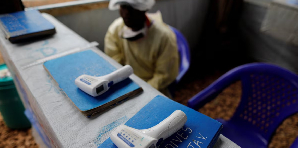 An Ebola Treatment Centre in eastern Democratic Republic of Congo





Entertainment