Every month, Jinja Regional Referral Hospital (JRRH) loses an average of 10 newborns to birth asphyxia, a condition in which a baby is deprived of oxygen before, during, or immediately after birth.
The condition often prevents the baby from taking their first breath or crying after delivery. The lack of oxygen can lead to immediate death or long-term complications such as cerebral palsy.
At JRRH, hospital officials say delays in maternal care, poor referral systems, limited emergency preparedness, and systemic understaffing are major contributing factors.
“High neonatal mortality due to birth asphyxia reflects limited access to quality maternal and child health services—from antenatal care to delivery and postnatal support,” said Dr Alfred Yayi, the hospital director.
Over the past five quarters, the hospital recorded a neonatal mortality rate of 33 deaths per 1,000 live births, with 80 percent of the deaths occurring within the first week of life. Dr Yayi said most of these deaths are directly linked to asphyxia.
“If we strengthen antenatal and delivery services, we can significantly reduce these avoidable deaths,” he said.
In many cases, the hospital receives mothers who have laboured for days at home or in under-resourced facilities, only to arrive too late for life-saving interventions.
“Some babies don’t cry at birth because of delays in referrals or lack of skilled personnel during labour,” Dr Yayi said.
Dr Joseph Beinomugisha, an obstetrician-gynaecologist at JRRH, underscored the significance of a baby’s first cry.
“When a baby is in the womb, the chest is filled with fluid. That first cry helps clear the lungs and allows the baby to take in oxygen. Without it, survival is compromised,” he explained.
He noted that delivery teams must always be prepared with oxygen, resuscitation kits, and trained staff on standby.
“If a baby doesn’t cry, it creates a psychological shock for the mother. It disrupts bonding and increases emotional stress. Babies who cry immediately tend to recover faster and need fewer interventions,” Dr Beinomugisha added.
Dr Agatha Namutosi Wakama, a paediatrician and newborn coordinator for Busoga Sub-region, says emergency preparedness is key.
“Timely C-sections and newborn resuscitation equipment can mean the difference between life and death,” she said.
She also advised mothers to prepare early by saving money, identifying reliable transport, and seeking care at facilities with skilled personnel.
Midwife Annet Naiga emphasised the importance of antenatal visits.
“During antenatal care, we can detect infections, hypertension, or anemia that could affect the baby’s ability to cry at birth,” she said.
“Pregnant women are their baby’s first doctors. Monitor movements and avoid unprescribed drugs or herbs,” Ms Naiga added.
Dr Susan Rose Alero, the senior principal nursing officer at JRRH, warned mothers against using traditional birth attendants who are ill-equipped for emergencies.
According to Dr Anne Akullo, the president of the Uganda Paediatric Association, birth asphyxia is a leading cause of newborn death in Uganda.
“We must act urgently. These are avoidable deaths,” said Dr Akullo, a paediatrician at Mulago Hospital.
Dr Rony Bahatungire, the commissioner of Clinical Services at the Ministry of Health, blamed some cases on unethical practices by health workers.
“Delays caused by extortion—asking for money before care—have led to babies being born too weak to cry. That must stop,” he said.
According to Dr Charles Olaro, the director of Health Services at the Ministry of Health, birth asphyxia contributes to 59 percent of newborn deaths in Uganda.
“The real issue now is Delay 3—delays within hospitals. We’re seeing emergency C-sections taking five hours instead of 30 minutes. That’s unacceptable,” he said.
The ministry has prioritised functional maternity theatres, emergency care training, and resuscitation equipment.
As part of awareness efforts, June has been designated the “Every Baby’s First Cry” Month, launched at Jinja Hospital and aimed at scaling nationwide. The campaign promotes preparedness, skilled deliveries, and timely response.
Bigger picture
According to the 2022 Uganda Demographic and Health Survey, maternal mortality dropped from 336 to 189 deaths per 100,000 live births.
But neonatal mortality remains high at 22 per 1,000 live births, with 3 out of every 5 newborn deaths caused by birth asphyxia.
Africa News of Monday, 30 June 2025
Source: monitor.co.ug
Oxygen gaps claiming babies at Jinja hospital
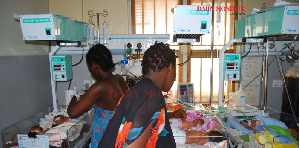 Mothers take care of their babies in the Neonatal ICU at Jinja Regional Referral Hospital