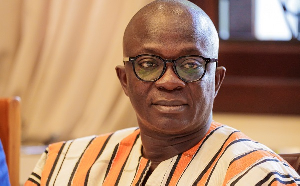
Manchester City winger Jeremy Doku has sparked an interesting conversation about his Ghanaian identity following revelations about his family’s origins, with Ghanaians divided over whether he is Ewe, Ga-Adangbe or Ashanti.
The debate emerged after the Belgian international spoke about his Ghanaian heritage in an interview with Manchester City, revealing that both his parents were born in Kumasi and identifying his family as Ashanti.
However, his surname has prompted questions, with some social media users arguing that Doku is traditionally an Ewe name, while others associate it with Ga-Adangbe communities.
What does his surname tell us?
A person’s surname can provide clues about their family history and ancestry, but it is not always a reliable way of establishing ethnic identity.
Ghana’s ethnic groups have interacted through migration, marriage and settlement over generations. Consequently, surnames can sometimes be found across different communities.
The claims linking Doku to Ewe and Ga-Adangbe communities therefore deserve investigation rather than being dismissed outright.
The Kumasi connection
In the Manchester City interview, Doku was asked about his family background.
“Ashanti. They were born in Kumasi,” he responded.
Waakye, Ashanti Roots: Jeremy Doku opens up on his Ghanaian heritage
He also explained that Twi was the language spoken in their household in Belgium, while Ghanaian food and other cultural practices helped maintain their connection to the country.
His parents’ reported birthplace and his own description of their background provide evidence supporting an Ashanti family connection.
What can we establish?
Jeremy Doku’s account provides a clear indication of his Ashanti family roots.
He has identified his family as Ashanti, revealed that both his parents were born in Kumasi and explained that Twi was the language spoken in their household.
Although his surname has generated debate, with some Ghanaians associating Doku with Ewe and others with Ga-Adangbe communities, a surname alone does not determine a person’s ethnicity.
The evidence therefore supports Doku’s claim of Ashanti ancestry.
The fact that the Doku surname is also associated with other Ghanaian communities does not automatically contradict his account.
FKA/AM
Sports News of Friday, 20 November 2026
Source: www.ghanaweb.com
Ewe, Ga-Adangbe or Ashanti? Unpacking Jeremy Doku’s Ghanaian roots amid surname debate
 The Belgian international was born in Antwerp to Ghanaian parents