The story of Wilson Oruma is one that begins in glory and descends into a painful lesson many young footballers are only now beginning to understand.
In 1993, Oruma stood at the summit of youth football, captaining Nigeria to victory at the FIFA U-17 World Cup.
Just three years later, he was part of the historic squad that delivered Olympic gold at the 1996 Summer Olympics, a golden generation that announced Nigeria to the world.
From there, his career took him across Europe. He played in France with clubs like Olympique de Marseille and RC Lens, building a reputation as a hardworking and intelligent midfielder.
Over nearly two decades, Oruma earned well, lived the life many dream of, and seemed set for a comfortable retirement.
But when the noise of football faded, a different battle began.
Around 2012, Oruma became involved in what he believed was a lucrative investment opportunity. Introduced through a trusted religious figure, the deal was presented as a chance to acquire oil assets at a favourable rate.
It sounded legitimate. It sounded secure. Most importantly, it came through someone he trusted.
He invested heavily.
Then, everything collapsed.
The returns never came. Communication broke down. The people behind the deal disappeared.
By the time reality set in, Oruma had lost a fortune, reportedly in the region of $870,000, money earned over years of discipline, sacrifice, and success in Europe.
The financial loss was devastating, but what followed was even more difficult.
Those close to him say the former Super Eagles midfielder struggled deeply in the aftermath.
The betrayal, the shock, and the sudden collapse of financial security took a heavy emotional toll.
For a period, Oruma battled serious mental distress, withdrawing from the public and quietly fighting a personal battle far removed from the stadiums where he once thrived.
It was a stark contrast. The same man who once controlled the tempo of games on the pitch was now trying to regain control of his own life.
Issahaku, Senaya, Asare: Watch the dance battle in Black Stars camp
Support eventually came. The Nigeria Football Federation reached out, while figures within Nigerian football, including Amaju Pinnick, helped him through his recovery. Slowly, step by step, Oruma began to rebuild.
Today, he lives a quieter life, largely away from the spotlight. The roar of the crowd has been replaced by reflection, and the lessons of his journey now carry more weight than the trophies he once lifted.
Oruma had the talent. He had the career. He had the success.
But beyond the medals and memories, Wilson Oruma’s story has become something else, a warning.
FKA/JE
Watch as Ghanaians blast CAF over decision to strip Senegal of AFCON title
Sports News of Wednesday, 25 March 2026
Source: www.ghanaweb.com
How a pastor defrauded U-17 World Cup hero Wilson Oruma of $870,000
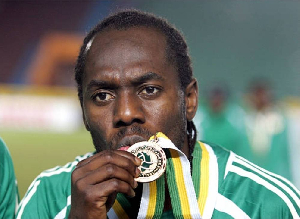 Wilson Oruma had a long football career across Europe