On a cold Christmas Eve in 1914, something extraordinary happened along the Western Front of World War I. The sound of gunfire faded, and in its place came laughter, songs, and the thud of a football being kicked across frozen ground. For a brief moment, the war paused.
As night fell, British and German soldiers emerged cautiously from their trenches. What began as carols drifting through the darkness soon turned into gestures of goodwill.
Cigarettes, chocolate, and handwritten notes were exchanged between men who, just hours earlier, had been enemies. In that fragile calm, someone produced a football. No referee. No whistle. No rules. Just soldiers, boots, and a shared instinct to play.
The match itself was informal and uneven, played on muddy, shell-scarred land. Caps marked goalposts. Heavy military boots replaced proper kits. Yet the joy was unmistakable. Shouts of encouragement replaced commands.
Watch highlights of Asante Kotoko's 2-0 win over Eleven Wonders
Laughter echoed where artillery once roared. Some accounts say the Germans won; others insist the British had the upper hand. The score, however, never truly mattered.
What mattered was the humanity on display. For a short time, men remembered they were sons, brothers, and fathers before they were soldiers. Football became a universal language, cutting through fear, ideology, and uniformity.
On that Christmas Eve, the ball did what diplomacy could not: it united enemies without a single word needing translation.
By morning, the truce was over. Officers ordered troops back to their trenches, and the war resumed its brutal course.
High command on both sides quickly moved to ensure such moments never happened again. Yet the memory endured.
More than a century later, that Christmas Eve football match remains one of the most powerful symbols of peace in sporting history. On a night meant for hope and goodwill, football offered a simple but profound truth: sometimes, the strongest weapon is a shared moment of joy.
This Christmas, as the world celebrates, that frozen pitch in 1914 still whispers its message: peace, however brief, is always possible.
FKA/JE
Sports News of Thursday, 25 December 2025
Source: www.ghanaweb.com
December 25, 1914: The day World War I soldiers dropped their guns to play football
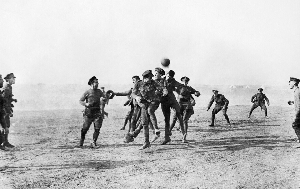 England and German soldiers playing football