Ghana will face a demanding assignment at the 2026 FIFA World Cup when the Black Stars come up against Panama in Group L, alongside England and Croatia.
While all three fixtures will test different aspects of Ghana’s game, the clash with Panama is shaping up to be the most unpredictable encounter.
But what exactly makes this CONCACAF side such a tricky opponent?
Let’s dig in.
Panama’s Form, Identity, and Qualification Momentum
Panama head into the 2026 World Cup with growing confidence after a solid March international window that produced a draw and a win against South Africa. They drew 1-1 in Durban before securing a 2-1 comeback victory in Cape Town, showing resilience in both matches after going behind.
Manager Thomas Christiansen’s side demonstrated adaptability across the two games. They started with a 3-4-2-1 system that struggled for control in the first match but later shifted to a more stable 4-2-3-1 in the second, which allowed Amir Murillo greater freedom to advance from right-back.
Panama’s qualification campaign was even more impressive. They topped their opening CONCACAF group with a perfect record and went unbeaten through the next phase, eliminating Suriname, Guatemala, and El Salvador. It marked their most dominant qualification run in history, built on structure, discipline, and efficient transitions.
Tactical Identity Under Thomas Christiansen
Since taking charge in 2020, Christiansen has built Panama into a compact, organised team that thrives on defensive discipline and quick attacking transitions.
Their style is not about dominating possession. Instead, Panama are most dangerous when they absorb pressure, stay compact, and break quickly through key individuals who can change the rhythm of matches.
Anabal Godoy, with nearly 160 international caps, anchors the midfield with leadership and tactical awareness. His role is similar in importance to Ghana’s own defensive midfield leader, providing structure and balance in front of the defence.
Adalberto Carrasquilla adds creativity and control in midfield, while Cecilio Waterman leads the line as the physical focal point in attack. Amir Murillo remains their most complete player, offering both defensive reliability and attacking threat from right-back.
Panama’s Attacking Style at the 2026 World Cup
Panama’s attacking approach is built around a small but highly influential core of players who shape how they create chances and transition forward.
Amir Murillo as the Key Offensive Outlet
Amir Murillo is Panama’s most important attacking weapon. Operating from right-back, he provides width, overlapping runs, and high-quality deliveries into the box. His ability to contribute in both phases of the game makes him central to Panama’s tactical plan.
Adalberto Carrasquilla as the Creative Engine
Adalberto Carrasquilla is the heartbeat of Panama’s midfield. His vision and passing range allow Panama to transition quickly from defence to attack, especially in tight central areas where space is limited. He is the player responsible for linking defensive recovery to attacking momentum.
Cecilio Waterman as the Physical Reference Point
Cecilio Waterman provides Panama with a direct attacking option. His physical presence, movement, and aerial ability make him especially dangerous in set-piece situations and long-ball transitions when Panama need to relieve pressure.
Ismael Daaz and the Transition Threat
Ismael Daaz offers pace and attacking penetration from wide areas. His ability to break forward quickly makes him a key outlet when Panama win the ball high up the pitch and look to exploit disorganised defences.
Panama’s most realistic attacking strategy involves absorbing pressure, staying compact, and then breaking quickly through Murillo and Carrasquilla. Against stronger teams like England or Croatia, they will rely heavily on this structure. Against Ghana, however, they will see a more balanced opportunity to compete for points.
Panama’s Defensive Setup and Structural Discipline
Defensively, Panama rely on organisation and experience across key positions. Orlando Mosquera provides stability in goal, while the centre-back pairing of Josao Cardoba and Andraes Andrade is tasked with maintaining compactness and discipline.
Anabal Godoy plays a crucial screening role in midfield, protecting the defence and breaking up opposition attacks before they develop.
The system is supported by an asymmetric full-back setup, with Murillo pushing forward aggressively on the right while the left side remains more conservative, often occupied by Eric Davis in a deeper role.
Defensive Weakness and Tactical Concerns
Panama’s main vulnerability appears when opponents attack quickly into the space behind their wide midfield areas, particularly when they deploy a back three. This was exposed in their early March match against South Africa, where transitions caused problems.
Their switch to a back four in the second match was a clear adjustment aimed at improving stability against wide attacks.
Against teams like England, Croatia, and Ghana, this remains a concern. All three opponents have the pace and width to exploit those spaces if Panama lose shape during transitions.
Panama vs Ghana Outlook and Prediction
Panama will approach this match with caution, looking to stay organised, frustrate Ghana, and strike through quick transitions and set pieces. Ghana, on the other hand, will likely see this as one of their most winnable group fixtures.
That balance makes this one of the most unpredictable games in Group L.
Prediction: Ghana 2-1 Panama
Sports News of Friday, 29 May 2026
Source: ghanasoccernet.com
World Cup 2026: A closer look at Panama; Ghana's Group L opponent
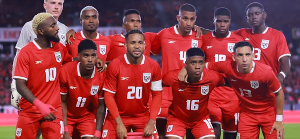 A photo of the Panama national football team