10 key takeaways from Ghana's 2027 Budget
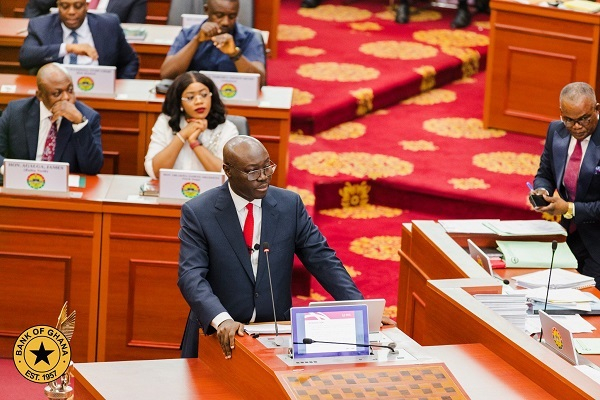
Finance Minister Dr Cassiel Ato Forson presented the 2027 Budget Statement and Economic Policy to Parliament on Thursday, November 12, 2026, under the theme, “The New Economy, New Ghana, Jobs and Prosperity.”
The Budget focuses on creating jobs, increasing local production, supporting businesses and improving the living conditions of Ghanaians.
Here are 10 key things to know about the 2027 Budget.
'Our responsibility is to build an economy that creates jobs' – Finance Minister
1. US$10 billion to transform Ghana’s economy
The government plans to invest US$10 billion between 2027 and 2030 under its New Economy Programme.
The programme aims to create jobs, increase local production and reduce Ghana’s dependence on imported goods. In 2027 alone, the government plans to invest GH¢30 billion in the programme.
2. Ghana’s economy expected to grow by 5.2%
The government expects Ghana’s economy to grow by at least 5.2% in 2027. It also targets 5.7% growth in the non-oil sector and aims to keep inflation at 8% by the end of the year.
3. Government to spend GH¢375 billion
The government plans to spend GH¢375 billion in 2027 and expects to raise GH¢323.1 billion through taxes, other sources of revenue and grants.
4. No new taxes in 2027
The government has announced that it will not introduce any new taxes in 2027. Instead, it will focus on improving tax collection, preventing revenue losses and reviewing existing tax laws.
5. GH¢29 billion to pay bondholders
The government has announced plans to make GH¢29 billion available for the early repayment of bonds due in February 2027.
The move forms part of its commitment to repay investors affected by the Domestic Debt Exchange Programme (DDEP).
6. US$3 billion investment in agriculture
The government plans to invest US$3 billion in agriculture under the New Economy Programme.
The investment will support the production of rice, poultry, sugar, maize, fish and other agricultural products.
The aim is to increase local food production, reduce imports and create jobs.
7. Ghana to stop exporting selected raw minerals by 2030
The government plans to process more of Ghana’s mineral resources locally before exporting them.
It aims to refine 70% of gold produced by small-scale miners locally by December 2027, increasing to 100% by December 2028.
Ghana also plans to end raw manganese and bauxite exports by 2030 as part of efforts to promote local processing and increase the value retained in the country.
8. GH¢48 billion for education
The government has allocated GH¢48 billion to the education sector.
The allocation includes GH¢11.2 billion for the Ghana Education Trust Fund (GETFund), GH¢1.37 billion to end the double-track system, GH¢537 million for the No Fees Stress policy and GH¢292 million for the Free Sanitary Pads Programme for schoolgirls.
9. GH¢40.3 billion for healthcare
The Ministry of Health will receive GH¢40.3 billion to improve healthcare delivery.
The allocation includes GH¢10.2 billion for the National Health Insurance Scheme, GH¢2.6 billion for MahamaCares and GH¢1 billion to complete 35 Agenda 111 hospitals.
10. GH¢29.8 billion for the Big Push Programme
The government has allocated GH¢29.8 billion to the Big Push Programme to construct and improve roads and other major infrastructure across the country.
Ghana to ban raw manganese and bauxite exports by 2030 – Ato Forson
The Ministry of Roads and Highways will also receive GH¢11.3 billion to support road construction and maintenance.
The 2027 Budget focuses on using Ghana’s economic recovery to create jobs, support local businesses, improve roads, schools and hospitals, and enhance the living conditions of Ghanaians.
However, the success of these plans will depend on how effectively the government implements the proposed measures and manages public spending.
DR/MA
Read the full text of the 2027 Budget below
Dr Cassiel Ato Forson presents the 2027 Budget Statement and Economic Policy
Source: www.ghanaweb.com« Previous |
Next »