From Nana Ampadu to Daddy Lumba: Here are the earliest songs recorded by 10 Ghanaian music legends
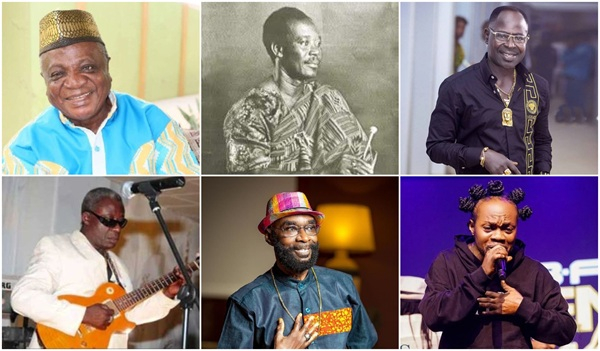
Ghana’s music industry has produced some of the most influential musicians on the African continent, with several legends leaving behind songs that have become timeless classics.
From highlife pioneers who laid the foundation for modern Ghanaian music to musicians who helped take the country’s sound to the international stage, these artistes have had remarkable journeys spanning several decades.
While some began their careers as members of bands and music groups before establishing themselves as solo artistes, their earliest recordings offer an interesting glimpse into the beginnings of their musical journeys.
Here are some of the earliest timeless recordings associated with 10 Ghanaian music legends:
1. Nana Kwame Ampadu - ‘Agynaka Dabere’ and ‘Suminasi Ntonko’
The late legendary musician, Nana Kwame Ampadu, is one of Ghana’s most celebrated highlife musicians.
The late highlife legendary artiste began his musical journey with the African Brothers Band, which he formed in 1963.
The band recorded its maiden single, titled “Agynaka Dabere” and “Suminasi Ntonko,” in 1966.
The recordings marked the beginning of what became one of the most influential careers in Ghanaian highlife.
2. Daddy Lumba - ‘Lumba Lumba’
This list would be incomplete without mentioning one of Ghana's favourite musicians, the late Charles Kwadwo Fosu, popularly known as Daddy Lumba.
Before becoming one of Ghana’s biggest musicians, the late Daddy Lumba was already composing music during his formative years.
One of the early songs associated with his musical beginnings is “Lumba Lumba,” which he composed while he was part of the Nkwanta Wesley Singers.
The song became popular and eventually contributed to the name "Lumba," which is still popular even after his death.
3. Osibisa - ‘The Dawn’
Osibisa occupies a unique place in Ghana’s musical history, having helped introduce African-inspired music to international audiences.
The group released its self-titled debut album, Osibisa, in 1971.
One of the songs on the historic album was “The Dawn,” which formed part of the recordings that introduced Osibisa’s distinctive fusion of African rhythms, jazz and rock to the world.
4. Pat Thomas - ‘Go Modern’
Pat Thomas, popularly known as the “Golden Voice of Africa,” began his career working with established Ghanaian bands before becoming a major solo artiste.
Among his early recordings is “Go Modern,” associated with his work with the Broadway Dance Band and his collaboration with fellow Ghanaian musician Ebo Taylor.
The recording came during the formative years of Pat Thomas' career.
Following the introduction of Pat Thomas ' "Go Modern" song, the legendary Highlife musician has served Ghanaians and music lovers with great tunes to date.
5. George Darko - ‘Ako Te Brofo’
The late legendary Ghanaian musician, George Darko, is gone but still lives in the heart of every Ghanaian, especially when his song "Ako Te Brofo" is being played.
George Darko is widely recognised as a pioneer of the burger highlife movement.
His song “Ako Te Brofo,” released in the early 1980s, became a breakthrough and helped establish his name within Ghanaian music.
The song also became an important part of the burger highlife era, a sound that was heavily influenced by Ghanaian musicians living and working in Europe.
6. E.T. Mensah - ‘Ghana Freedom’
Again, this list can not be complete without mentioning the name of the late legendary Ghanaian highlife musician, E. T. Mensah, because he is regarded as one of the pioneers of modern Ghanaian dance-band highlife.
His career began long before Ghana gained independence, and he became a leading figure in the development of the country's popular music.
Among his historically significant early recordings is “Ghana Freedom,” a song associated with Ghana’s independence celebrations in 1957.
The song reflected the excitement surrounding the country's emergence as an independent nation.
E.T. Mensah is still being remembered in Ghana and beyond, especially during the country's Independence Day Celebrations.
7. Koo Nimo - ‘Yaa Amponsah’
Agya Koo Nimo is another legendary figure whose career is deeply rooted in Ghana’s traditional guitar-band and palm-wine music traditions.
Before becoming known for his distinctive sound, he worked with several guitar bands, including I.E. Mason’s and K. Gyasi’s guitar bands.
“Yaa Amponsah” is one of the songs strongly associated with the guitar-band highlife tradition that shaped his early musical journey.
8. Amakye Dede - early recordings with the Kumapim Royals
Amakye Dede, popularly known as Iron Boy, started his professional career with the Kumapim Royals in the early 1970s before establishing himself as one of Ghana’s most successful highlife musicians.
His early years with the group contributed significantly to his development as a musician.
Songs such as “Dabi Dabi Ebeye Yie” and “Akwadaa Wesoa” are among the early recordings associated with his career before he became widely celebrated as the “Iron Boy.”
9. Kojo Antwi - early band recordings
Kojo Antwi’s musical journey also began long before he became a household name.
The legendary musician started his career with J.K. and the Boom Talents Band around 1975 and later worked with groups including Classique Vibes and Classique Handles.
His earliest recordings therefore came during his years with these groups, before he eventually embarked on a successful solo career.
Kojo Antwi would go on to become one of the most influential musicians in Ghana, with a catalogue spanning highlife, reggae, Afro-pop and other genres.
10. Ebo Taylor - early band recordings
The late Ebo Taylor is another Ghanaian music legend whose recording career stretches back several decades.
Before becoming internationally recognised for his distinctive highlife and Afrobeat sound, the late Taylor worked with various Ghanaian dance bands and musical groups.
His early collaborations with musicians such as Pat Thomas played an important role in shaping his career.
Recordings from his later work, including “You Need Love,” provide a glimpse into the sound that eventually established him as one of Ghana’s most respected musical exports.
JHM/AM
Source: www.ghanaweb.com« Previous |
Next »