From Accidental President to Historic Comeback: John Mahama's 14-year political journey
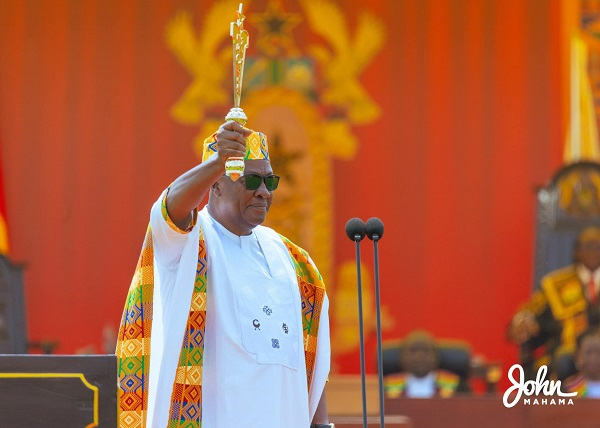
From 2012 to 2026, President John Dramani Mahama’s political journey has undergone a dramatic transformation. He moved from an unexpected successor who had to establish himself in the presidency to Ghana’s first sitting president to lose an election in the Fourth Republic, before spending eight years in opposition and eventually staging a historic return to power.
His journey has also changed the way his political record is perceived. Policies and projects that were once viewed as weaknesses have, over time, become part of a broader argument about his foresight and experience.
By 2026, Mahama is governing not as the politician who unexpectedly inherited the presidency in 2012, but as a veteran statesman with experience at virtually every major level of Ghanaian politics.
2012–2016: From unexpected successor to elected president
Mahama's rise to the presidency in 2012 was shaped by circumstances that he had not originally anticipated.
He became president following the death of President John Evans Atta Mills in July 2012, having previously served as Mills' Vice President.
He subsequently contested the December 2012 presidential election as the National Democratic Congress (NDC) candidate and secured a full mandate.
His first presidency was marked by a strong emphasis on infrastructure development under the Better Ghana Agenda.
His administration invested heavily in roads, schools, health facilities, energy infrastructure and other public projects.
But the administration was also confronted by serious economic challenges and a prolonged power crisis popularly known as “Dumsor”. The electricity crisis, together with concerns over the economy, unemployment and living conditions, increasingly shaped public perception of the government.
By the time Ghana went to the polls in 2016, Mahama's infrastructure record had become intertwined with the frustrations of voters who wanted immediate economic relief.
2016: The unprecedented defeat
The 2016 general election marked the biggest setback of Mahama's political career.
He lost the presidency to then-NPP candidate Nana Addo Dankwa Akufo-Addo, becoming the first sitting president in Ghana's Fourth Republic, which began in 1993, to lose a presidential election.
The defeat also made Mahama the first president of the Fourth Republic to serve only one full presidential term.
His defeat reinforced an emerging pattern in Ghana's Fourth Republic: since 1993, political power had generally followed a two-term cycle, with governing parties securing two consecutive terms before voters changed the party in government.
Mahama's defeat therefore represented more than the loss of an individual president. It reinforced Ghana's developing reputation for using elections to alternate political power between the NDC and the New Patriotic Party (NPP).
One of the most memorable criticisms directed at Mahama's administration was captured in the phrase “we don't eat infrastructure”. The expression reflected the frustration of voters who felt that physical development projects could not compensate for economic hardship, unemployment and other difficulties affecting households.
Mahama left office with his infrastructure-focused development agenda largely overshadowed by the economic difficulties experienced during his administration.
2017–2024: The long road back
The 2016 defeat did not end Mahama's political career.
He remained a major figure within the NDC and returned as the party's presidential candidate for the 2020 election. He contested against Akufo-Addo but was defeated again, extending his period outside government.
The years in opposition nevertheless gave Mahama an opportunity to rebuild his political image.
He increasingly presented himself as an experienced and reflective former president who had learnt from the challenges of his first administration. His experience in government also became more valuable as Ghana's political and economic circumstances changed.
The subsequent economic difficulties experienced under the Akufo-Addo administration created a new context in which Mahama's first presidency was increasingly reassessed.
Ghana eventually faced severe fiscal pressures, debt restructuring and broader macroeconomic turbulence. Against that background, some of the infrastructure projects delivered during Mahama's first term acquired a different significance.
Mahama's 100 Days in Office: The achievements and the missed promises
From vulnerability to vindication
The political narrative surrounding Mahama's infrastructure record consequently began to change.
In 2016, his emphasis on roads, schools, hospitals and other physical assets had been criticised by voters who prioritised immediate economic relief, with “we don't eat infrastructure” becoming one of the defining phrases associated with his defeat.
By 2024, however, Ghana's economic difficulties had created a different environment for judging those same investments.
Infrastructure that had once been presented as evidence that Mahama's priorities were misplaced could now be viewed as tangible national assets with long-term value. His first-term record was increasingly interpreted not simply through the economic difficulties of his administration but also through what it had left behind.
In that sense, Mahama's political vulnerability gradually became part of his vindication. What critics had once regarded as excessive concentration on infrastructure could now be portrayed as evidence of a longer-term development vision.
December 2024: The historic comeback
Mahama's political rehabilitation reached its climax in the December 2024 general election.
After eight years in opposition and two previous presidential defeats, he returned to the presidency on a platform centred on “Resetting Ghana”.
His campaign focused heavily on economic recovery, job creation, accountability, corruption and rebuilding public confidence in the country's institutions.
The victory was politically significant because Mahama had achieved something few expected after his 2016 defeat: he had returned to the same presidency he had once lost.
The comeback transformed his political story from one of electoral failure into one of resilience.
The politician who had become the first sitting president to lose an election in the Fourth Republic had now become a returning president, giving him an opportunity to govern Ghana for a second time.
2025–2026: The experienced returning president
Mahama was sworn into office on January 7, 2025, beginning his second, non-consecutive presidency.
His return to the presidency came with a considerably different political identity from the one he had in 2012.
When he first entered the presidency, Mahama was an experienced politician but an unexpected successor who had to establish his own identity while operating within the historical shadow of the NDC's founder, Jerry John Rawlings.
By 2026, that political identity had changed considerably.
Mahama had accumulated experience as a Member of Parliament, Deputy Minister, Minister, Vice President and President. His return to the presidency therefore came after decades of direct involvement in Ghana's political and governmental institutions.
He had experienced government from multiple levels, lost power, led the opposition, contested two presidential elections from outside government and eventually returned to power.
That institutional experience has become one of the defining features of his second presidency.
The urgency of a final legacy
There is another crucial difference between Mahama's first and second presidencies: his current tenure is constitutionally his final term as president.
During his first presidency, the possibility of another consecutive term remained available. His current position is fundamentally different because he cannot seek another presidential term after completing his second tenure.
This has given his final presidency a strong legacy dimension.
Rather than governing with another presidential campaign ahead of him, Mahama has an incentive to concentrate on reforms that he believes can outlast his administration. His agenda has included fiscal discipline, institutional reforms, accountability and the implementation of the 24-Hour Economy Initiative.
His second presidency can therefore be viewed as a race against time – an effort to consolidate economic reforms, strengthen public institutions and establish a lasting legacy before he leaves office.
From vulnerability to vindication, from defeat to comeback
Mahama's political journey between 2012 and 2026 is ultimately a story of transformation.
In 2012, he entered the presidency unexpectedly and later won his own mandate.
In 2016, he became the first sitting president in Ghana's Fourth Republic to lose an election and the first to serve only one full term.
Between 2017 and 2024, he endured two presidential defeats, rebuilt his political standing and remained at the centre of the NDC's opposition politics.
In 2024, he returned to power after eight years in opposition.
And by 2026, he was governing for the second time as a considerably more experienced political figure, with no further presidential term available to him after the current one.
His story also illustrates how political perceptions can change with time. Infrastructure that was once dismissed through the phrase “we don't eat infrastructure” became part of the case for his foresight when the country later confronted deeper economic challenges.
Mahama's political evolution can therefore be summed up in four stages:
The unexpected successor → the elected president → the defeated opposition leader → the returning statesman.
His final chapter will ultimately be judged not by the fact that he managed to return to power, but by what he does with that second and final opportunity and the legacy he leaves behind when it ends.
MRA/BAI
Source: www.ghanaweb.com« Previous |
Next »