Debt service falls below 20% of revenue - Finance Minister
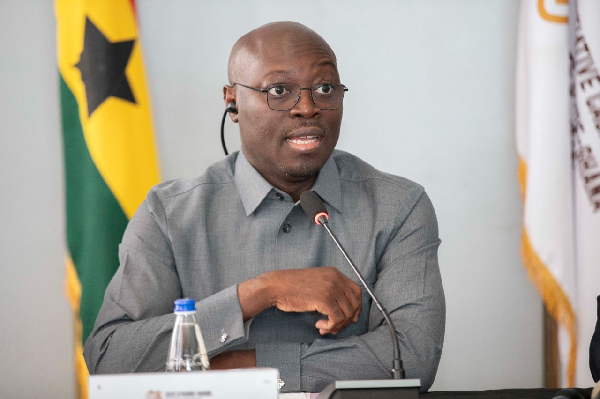
Ghana’s debt-service burden has fallen below 20 percent of government revenue, significantly reducing the amount of public resources being absorbed by debt repayments and creating greater fiscal room for infrastructure and productive investment.
Finance Minister Dr Cassiel Ato Forson said the ratio has declined sharply from about 55 percent during the height of the country’s debt crisis, following the restructuring of domestic and external obligations and improvements in the government’s fiscal position.
For every GH¢100 government collects in revenue, less than GH¢20 now goes into debt service, compared with about GH¢55 previously, freeing a significantly larger share of public resources for other expenditure.
“We have reduced debt service from about 55 percent of revenue to less than 20 percent,” Dr Forson said.
“That means we are creating the fiscal space to invest in infrastructure, to invest in our people and to invest in the productive sectors of the economy.”
The reduction marks one of the clearest improvements in Ghana’s fiscal position since the country began restructuring its public debt after suspending payments on most external obligations in December 2022.
Debt service had become one of the biggest pressures on the national budget, consuming an inordinately large share of government revenue and limiting resources available for capital expenditure and other programmes.
The latest ratio suggests that pressure has eased considerably.
Oil exploration in Keta Basin gathers steam
The improvement has also been progressive. Debt service represented 28.8 percent of domestic revenue in 2025, according to figures presented by the Finance Minister during the 2026 Mid-Year Budget Review, before falling below 20 percent currently.
However, the reduction does not mean the difference between the previous and current ratios is immediately available for discretionary spending.
Government still has substantial commitments covering wages and salaries, statutory transfers, social programmes and other recurrent expenditure, while repayments on restructured debt will continue over the coming years.
But a smaller debt-service claim on revenue gives the budget greater flexibility and reduces the extent to which government must choose between meeting debt obligations and financing other expenditure.
Government spent GH¢21.7 billion on capital projects in the first half of 2026 against a programmed GH¢36.6 billion, leaving capital expenditure GH¢14.9 billion, or about 41 percent, below target.
The shortfall occurred even as overall fiscal performance remained stronger than programmed, raising questions over whether expenditure restraint was being achieved partly at the expense of investment.
Lower debt-service requirements could provide room to accelerate infrastructure spending during the second half of the year without placing the same pressure on the fiscal balance.
The lower debt burden creates room for increased infrastructure spending, stronger government demand and fresh investment opportunities for the private sector.
Infrastructure spending can have a direct effect on construction, employment and demand for locally supplied materials and services, while investment in transport, energy and other productive infrastructure can reduce operating costs and support private investment over the longer term.
The reduction in debt service follows a restructuring programmethat has altered the timing and cost of a substantial portion of Ghana’s domestic and external obligations.
The Domestic Debt Exchange Programme restructured government securities held by domestic investors, while agreements with official and commercial external creditors have provided debt-service relief through maturity extensions, reduced interest payments and other changes to repayment terms.
Government has continued to conclude bilateral agreements with individual creditor countries as part of that process.
Ghana only on Friday last week signed a €163 million bilateral debt restructuring agreement with Belgium, another step in implementing the agreement reached with the country’s Official Creditor Committee.
The reduction in debt service could also lessen government’s financing pressure in the domestic market.
Heavy debt repayments and persistent fiscal deficits previously forced government to depend heavily on domestic borrowing, contributing to high interest rates and increasing competition with the private sector for available funds.
A sustained improvement in the fiscal position could reduce that pressure, although the extent of the effect will depend on government’s future borrowing requirements and execution of the budget.
The current relief will also have to be managed carefully.
Debt restructuring changes the timing and terms of repayments; it does not eliminate Ghana’s obligations. Debt-service requirements could rise again as grace periods expire and principal repayments on restructured obligations become due.
Directing a larger portion of the available resources into investments capable of expanding production, employment and the tax base could strengthen government’s capacity to meet future obligations without returning to excessive borrowing.
Lower debt-service costs could give government greater room to accelerate capital projects while reducing the pressure to raise additional financing from the domestic market. That would increase the flow of public investment into construction, transport and other infrastructure while leaving more domestic financing available to the private sector.
Government’s ability to preserve those gains will require continued revenue mobilisation and tighter control over new borrowing, particularly as repayments on restructured debt increase in the coming years.
Moving from about 55 percent of revenue being absorbed by debt service to below 20 percent represents a substantial easing of one of the constraints that dominated Ghana’s public finances during the debt crisis.
With less revenue being absorbed by debt service, government has greater room to finance infrastructure and other capital projects, creating opportunities for increased investment, contracts and private-sector activity across the economy.
Source: economytimesnews.com« Previous |
Next »