Home - 200 years after Katamanso: Remembering an important defeat in Asante history that changed Ghana forever
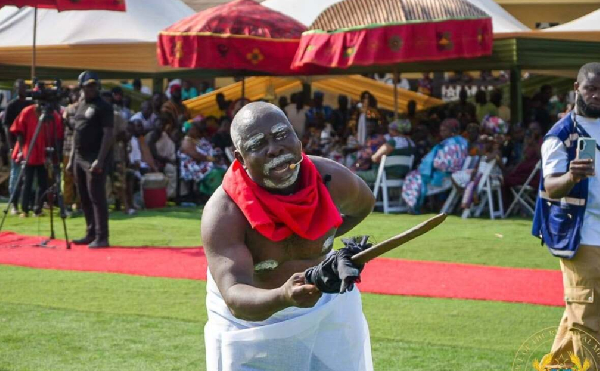 Traditional rulers, residents, descendants, visitors, and members of the diaspora joined the Akuapem people in Eastern Ghana last week to celebrate their military victory over the Asante Empire 200 years ago.
The Asante, or Ashanti, were a dominant people who governed a significant portion of present-day Ghana from the 1700s to the 1900s. The Asante Empire, known for its wealth from gold and agricultural trade, was also involved in the slave trade. From 1824 to 1900, the empire engaged in five conflicts with the British Empire and its African allies, aiming to control the coastal areas of present-day Ghana.
One was the historic Katamanso War, also known as the Battle of Dodowa, which changed Ghana’s history and its future forever.
Fought on August 7, 1826, in the Pinkwai Forest (close to where Dodowa is now), the battle united several states along the coast of Ghana to fight a common adversary – the Asante. The Asante Empire, known for its military strength and battlefield experience in West Africa, was defeated this time by a coalition of coastal states, including the Akuapem, Ga-Adangbe, Fante, Denkyira, Wassa, Ningo, Krobo, and Ada, with British military assistance.
Scholars said the battle marked one of the Asante Empire’s most significant military setbacks and showed the vital power of alliances among the coastal communities.
The conflict began after the Asante tried to punish the Ga-Adangbe people for not supporting their military campaign against the British and the Fante along the coast, according to Professor Nii Odoi Yemoh, President of the Ghanaian-Canadian Chamber of Commerce, in a press release issued from Toronto, Canada.
In terms of the war’s political, cultural, and historical impacts, Prof Yemoh said it “halted the Asante advance toward the coast, strengthened British influence in the region, and ultimately contributed to the expansion of British authority over the Gold Coast.”
In other words, the battle weakened Asante influence over several southern territories and altered the balance of power on the Gold Coast. Katamanso also became one of the early major conflicts in the long series of Anglo-Asante wars.
It’s been 200 years since the war; still, the people of Akuapem come together to commemorate their victory by reenacting the war.
They do this during the Akuapem Odwira festival, which features not only the re-enactment but also pageantry, a durbar, and a ceremonial gathering, the AP was told.
Traditionally, Odwira is a period of purification, thanksgiving, remembrance and spiritual renewal. This year’s festival brought together Akuapem traditional rulers, families and communities to celebrate their heritage, honor their ancestors, give thanks for the past year and settle disputes.
The festival has sustained core traditions such as ritual observances, processions, traditional drumming and dancing, and the display of royal regalia. Chiefs and elders use the platform to strengthen community unity and urge development throughout Akuapem.
During the 10th day of the celebration, young men dressed as warriors marched from the palace into the hills and forest for the re-enactment of the battle.
The men climbed a steep mountain into the forest, using the same path to the area where elders and historians say the battle took place. They performed rituals, including pouring libations at a stream.
Some of the young men acted as captured enemy soldiers. They were led back to the community in chains and received by crowds that had gathered before they were taken to the chief.
Nanahemaa Adwoa Awindor, the Queen Mother in charge of developmental activities, shared the significance of the festivities.
“Two hundred years of Odwira represents far more than the passage of time. It is a remarkable testimony to the resilience of the people, the continuity of tradition, and the enduring power of culture to bind generations together,” she said to the AP.
Source: face2faceafrica.com
News of 2026-11-07
