Home - Today in History: When Fred Akuffo banned strikes and declared a State of Emergency in Ghana
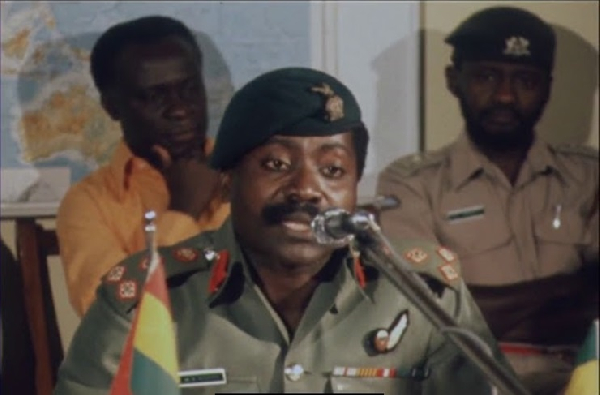 On November 6, 1978, Ghana’s military government, then led by Lieutenant General Lieutenant General Frederick William Kwasi Akuffo, took a drastic step in response to growing economic hardship and mounting labour unrest by declaring a state of emergency across the country.
The decision came at a turbulent period in Ghana’s history, when soaring inflation, worsening economic conditions and widespread industrial action had put the Supreme Military Council (SMC II) under enormous pressure.
For many Ghanaians, the declaration was more than a government response to an economic crisis. It marked another troubling chapter in a period when military rule, economic difficulties and restrictions on civil liberties had become defining features of national life.
The government subsequently introduced emergency measures that restricted industrial action and expanded its powers to detain people without trial. The move further strained relations between the military authorities, organised labour and sections of the public.
The scale of the industrial unrest was significant. Between August and November 1978, Ghana recorded eight strikes involving more than 70,000 workers. Employees of the Postal Services, the Electricity Corporation and the Ghana Industrial Holding Company (GIHOC) were among those who took industrial action, largely over demands for better pay to cope with the rising cost of living.
The economic situation had deteriorated sharply following the government's August 1978 currency devaluation. Prices of some consumer goods reportedly doubled or even quadrupled, leaving workers struggling to make ends meet.
Inflation was estimated to have reached about 300 per cent during the period, although historical accounts differ on the precise figure.
Rather than allowing the labour unrest to continue, Akuffo's administration resorted to emergency powers. Under the Emergency Decree of 1978, strikes and other forms of protest were outlawed, while damage to property was classified as an offence against state security.
The government also assumed sweeping powers, including the authority to detain individuals without trial, restrict movement and exercise control over property.
In a nationwide broadcast, Akuffo issued a stern warning to organised labour, declaring that: “Strikes... shall be regarded as criminal acts against the security of the state and will be dealt with according to the relevant laws of the country.”
He also ordered an investigation into an electricity workers' strike in and around Accra and threatened that the cost of damage caused during the industrial action would be deducted from the salaries of the workers involved.
The government's hardline position eventually led to the dismissal of striking civil servants, even as it began recruiting new employees to replace those who had withdrawn their services.
Although the state of emergency was lifted after eight weeks, the measures left considerable resentment among workers and civil servants. The government's attempt to enforce economic reforms through force had further damaged its relationship with an already dissatisfied workforce.
A government struggling to survive
Akuffo had assumed power in July 1978 after the removal of General Ignatius Kutu Acheampong, whose administration had faced growing opposition over economic mismanagement, corruption and its controversial Union Government (UNIGOV) proposal.
The change in leadership raised hopes that the military government would chart a different course. Akuffo abandoned the UNIGOV plan and announced steps towards a return to constitutional rule, including the restoration of multiparty politics.
However, changing the country's political direction proved easier than resolving its economic problems.
Ghana was battling shortages of essential commodities, declining production, a weakened currency and rising inflation. The economic difficulties had also intensified public dissatisfaction with military rule.
The United States Department of State's historical account of Ghana notes that the economic crisis and corruption under the military administration contributed significantly to the erosion of public confidence in the regime.
The state of emergency therefore became one of the defining episodes of Akuffo's short-lived administration. It exposed the growing tension between the government's determination to enforce its economic policies and the demands of workers and ordinary citizens who were bearing the brunt of the crisis.
Less than seven months after the declaration, on June 4, 1979, junior military officers led by Flight Lieutenant Jerry John Rawlings overthrew Akuffo's government in a coup, establishing the Armed Forces Revolutionary Council (AFRC).
The events of November 6, 1978, remain a reminder of how economic hardship, labour agitation and the use of state power combined to deepen Ghana's political instability during the final years of the Supreme Military Council's rule.
EA
Source: www.ghanaweb.com
News of 2026-11-06
