Home - Ghana secures IMF staff-level agreement on first PCI review
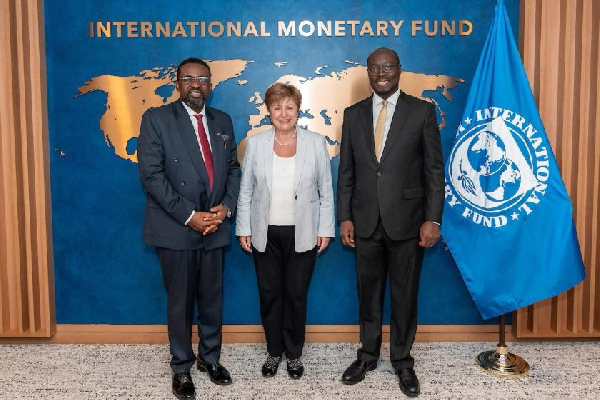 The International Monetary Fund (IMF) has reached a staff-level agreement with Ghana on the first review of the country's 36-month programme supported by the Policy Coordination Instrument (PCI).
The PCI is a non-financing programme offered by the IMF to member countries. It provides a framework for countries to work with the Fund to implement economic reforms, strengthen fiscal discipline and maintain macroeconomic stability without receiving direct financial assistance under the arrangement.
The latest agreement follows discussions between an IMF staff team, led by Dr Ruben Atoyan, and Ghanaian authorities during a visit to Accra from October 22 to November 4, 2026.
In a statement issued at the end of the visit, Atoyan said the agreement was subject to approval by IMF Management and the Executive Board.
“IMF staff and the Ghanaian authorities have reached staff-level agreement on the first review of the PCI. The agreement is subject to approval by IMF Management and the Executive Board,” he stated.
The IMF said Ghana's macroeconomic stability was becoming entrenched, citing strong economic growth, declining inflation and an improved fiscal position.
According to the Fund, Ghana's real Gross Domestic Product (GDP) grew by 6.2 per cent year-on-year in the first half of 2026, with growth projected at 5.7 per cent for the full year.
Inflation also declined to 5.5 per cent in October, remaining below the Bank of Ghana's target band of 8±2 per cent.
“The fiscal position is strong, with the primary surplus on track to meet the end-year programme target, and public debt remains low following rapid declines in recent years,” Dr Atoyan said.
The Fund, however, noted that Ghana's foreign exchange reserves had declined in recent months, prompting corrective measures by the authorities.
These include the transfer of foreign exchange intermediation from the Bank of Ghana to the Ghana Gold Board (GoldBod), as well as the implementation of higher gold sale requirements for large-scale mining companies.
The IMF stressed that consistent implementation of these measures, alongside greater exchange rate flexibility, would be necessary to rebuild the country's reserves.
On structural reforms, the Fund commended the publication of the Fiscal Strategy Document, parliamentary approval of the new Cocoa Board Act and continued quarterly electricity tariff adjustments.
It also noted that Ghana had completed a comprehensive review of its customs and excise legislation ahead of schedule.
However, the IMF said further work was needed on reforms to the Bank of Ghana's liquidity management framework, the Integrated Tax Administration System, the operationalisation of the Fiscal Council and the preparation of the Fiscal Risk Statement.
It also identified the delayed publication of the audit of the Electricity Company of Ghana's (ECG) collection accounts as an outstanding reform that needed to be completed.
Regarding the 2027 Budget, the IMF said the government's target of a primary surplus of 0.5 percent of GDP on a commitment basis was consistent with the PCI.
It said the fiscal space created would support investment in the government's New Economy priorities, including job creation, investment opportunities and infrastructure development.
The Fund, however, cautioned that Ghana remained vulnerable to external shocks, particularly fluctuations in gold, cocoa and oil prices, geopolitical tensions and tighter global financial conditions.
Domestic risks, including debt rollover requirements, financial sector weaknesses and fiscal pressures from the energy, cocoa and gold sectors, were also highlighted.
The IMF further urged improvements in governance, including the adoption of the Conduct of Public Officers Bill, publication of the second National Ethics and Anti-Corruption Action Plan and stronger oversight of state-owned enterprises.
The Fund said it remained committed to supporting Ghana's efforts to preserve economic stability and achieve stronger, more inclusive and job-rich growth.
MA
Source: www.ghanaweb.com
News of 2026-11-05
