Health News of Wednesday, 28 May 2025
Source: British High Commission, Accra
UK and Ghana unite for period-friendly future at menstrual hygiene day 2025 event

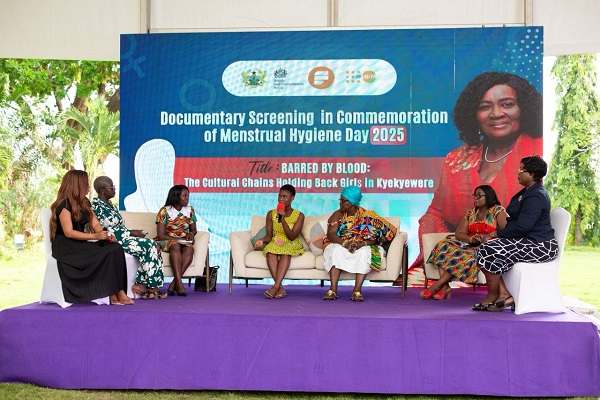
In a landmark collaboration between the British High Commission and the Office of the Vice President of Ghana, a high-level dialogue and documentary premiere were held on Tuesday, May 27, to mark Menstrual Hygiene Day (MHD) 2025. The event took place at the British High Commissioner’s residence in Accra under the theme “Together for a Period-Friendly Ghana.”
Held under the distinguished patronage of Her Excellency Professor Jane Naana Opoku-Agyemang, Vice President of the Republic of Ghana, the event brought together government officials, development partners, civil society, and youth advocates to spotlight the urgent need for menstrual health equity.
The centrepiece of the event was the premiere of a powerful documentary produced by the National Technical Committee on MHM, which highlighted the lived experiences of schoolgirls in marginalised communities. Filmed in the Central Region, the documentary captured the voices of girls, educators, policy makers and community leaders, revealing the barriers girls face in managing menstruation and staying in school.
“Periods should not be the period to a girl’s education,” said one student featured in the film, reinforcing the event’s central message that menstruation must never hinder a girl’s right to learn and thrive.
The initiative was coordinated by the Social Policy Advisor to the Vice President, in partnership with the British High Commission, Ghana Education Service (GES), Ministry of Gender, Children and Social Protection, and a coalition of development partners including UNICEF, WaterAid Ghana, World Vision Ghana, Plan International Ghana, and CONIWAS.
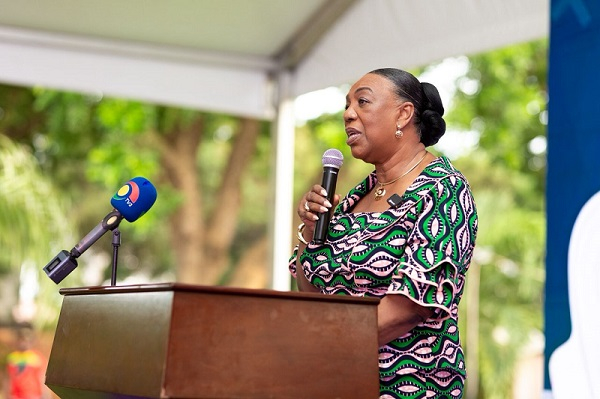
The event successfully raised awareness of menstrual hygiene challenges and their impact on girls’ education, promoted inclusive policies and sustainable menstrual health solutions, and mobilised stakeholders to support local initiatives for affordable menstrual products.
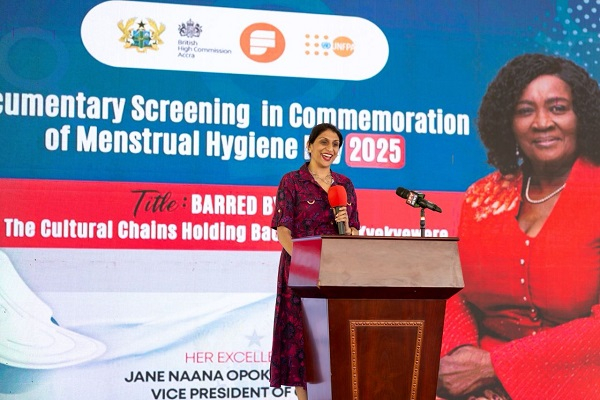
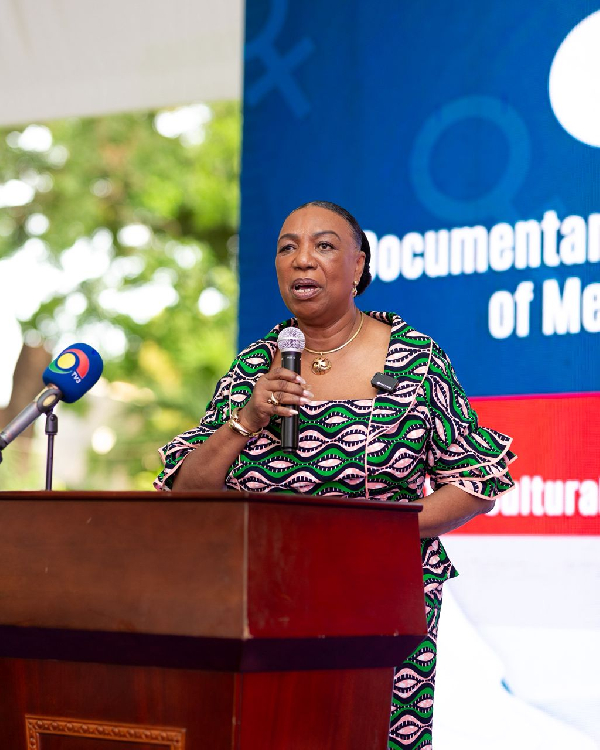
Speaking at the event, the British High Commissioner Harriet Thompson said:
“The passage of Ghana’s Affirmative Action Act provides a powerful framework to address systemic gender inequalities, including those rooted in menstrual health. Ensuring girls can stay in school and thrive is a foundational step toward achieving the Act’s goals of equal participation and representation. This collaboration between the UK and Ghana reflects our shared commitments to dignity, equality, and opportunity for all girls.”
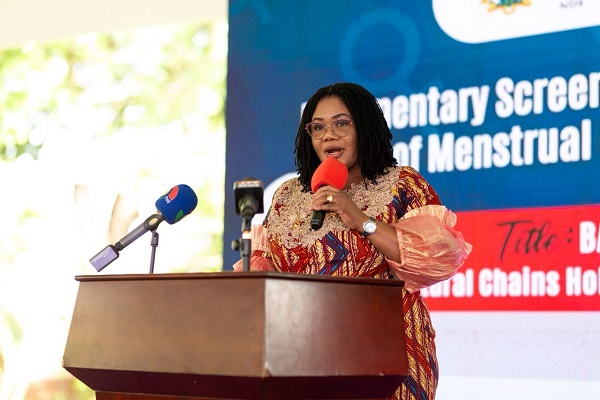
Vice President H.E. Professor. Jane Naana Opoku-Agyemang said: “Menstrual health is a matter of justice, dignity, and opportunity. No girl should ever be held back by her period. Together, we are building a Ghana where every girl can thrive free from stigma, free from barriers, and full of promise.”
The documentary is scheduled for nationwide broadcast and digital release to continue driving public engagement and policy dialogue. A public screening is also taking place today, May 28, at the Ashaiman Municipal Assembly, coinciding with the global observance of Menstrual Hygiene Day.
The campaign continues online under the hashtag #PeriodFriendlyGhana.
About Menstrual Hygiene Day (MHD):
Menstrual Hygiene Day is a global advocacy platform launched by WASH United in 2014 and observed annually on May 28. It aims to break the silence, taboos, and stigma surrounding menstruation and to promote access to safe and dignified menstrual health and hygiene for all.
About the Documentary:
The documentary premiered at the event was produced by the National Technical Committee on MHM and filmed in the Central Region of Ghana. It highlights the lived experiences of schoolgirls in marginalised communities and the barriers they face in managing menstruation and accessing education. It is intended as a tool for advocacy, awareness, and policy engagement.
Coordination and Support:
The initiative was coordinated by the Social Policy Advisor to the Vice President, in collaboration with the British High Commission, Ghana Education Service (GES), Ministry of Gender, Children and Social Protection, and development partners including UNICEF, WaterAid Ghana, World Vision Ghana, Plan International Ghana, CONIWAS, and others.



Entertainment
Daddy Lumba wasn't sick for 17 years – Great Ampong

Opinions