There is a weary, paradoxical narrative long assigned to Africa: a continent matchless in natural wealth holding 40% of the world’s renewable potential, 18 trillion cubic meters of natural gas, and critical mineral reserves yet constrained by systemic energy poverty.
Today, over 600 million Africans live without access to electricity. This is a story of resources divorced from results, and potential decoupled from power.
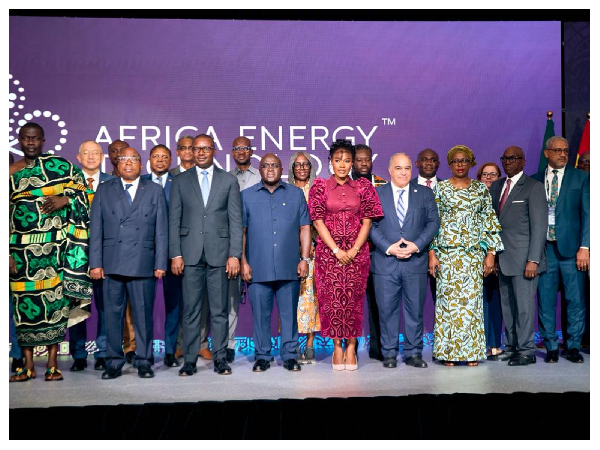
It was against this backdrop that the Africa Energy Technology Conference (AETC 2026) convened in Accra under the defining theme, 'From Borders to Bridges: Driving Intra-African Trade & Development through Energy & Technology Services.'
The imperative was clear: to transition Africa from economic isolation to structural harmonization. Critically, the platform refused to decouple energy from technology. Energy without technology is merely dormant potential; technology without energy is an unbacked aspiration.
Together, they constitute the foundational infrastructure of a modern, integrated African economy.
At this third edition of AETC, a paradigm shift took root one defined by deliberate, courageous, and institutionalized execution.
At the vanguard of this shift is the Africa Energy Technology Centre (AETC), a pan-African institution headquartered in Accra, Ghana.
The Centre’s mandate is to pivot Africa from a passive consumer of imported technologies into an active, globally competitive producer of homegrown innovation.
“The future is not something we wait for,” posited Emelia Cedar-Palm Akumah, Founder and President of AETC, during her plenary address. “It is an architecture we build deliberately, courageously, and sustainably.”
The paradox of Africa’s energy deficit is not a crisis of geology; it is a crisis of coordination, financing, and sustained political will.
Under the African Continental Free Trade Area (AfCFTA), the continent commands a market of 1.4 billion people with a combined GDP exceeding $3 trillion. Yet, intra-African trade stagnates below 20%.
The reality is stark: trade cannot move at the speed of economic ambition when infrastructure moves at the speed of regional bureaucracy. Without integrated energy systems, regional value chains remain entirely theoretical.
The Operational Pillars of Transformation
To bridge this chasm, the AETC has deployed three interconnected, flagship initiatives engineered to fundamentally restructure Africa's energy architecture:
1. The Youth Energy Entrepreneurship & Incubation Program (YEEIP)
Launched systematically during the conference, YEEIP shifts youth demographics from passive observers to active equity owners of Africa's energy destiny.
Targeting high-potential graduates and early-stage innovators, the program delivers rigorous technical training, structured business incubation, mentorship, and catalytic seed funding.
By preparing the next generation of energytech pioneers to be investment-ready, YEEIP ensures that the demographic inheriting the consequences of today’s decisions holds a seat at the table where those decisions are negotiated.
2. The Africa Smart Energy Technology & Innovation Hub (ASETIH)
Established as a premier institutional laboratory, ASETIH is Africa’s first purpose-built center dedicated exclusively to energy technology innovation, advanced workforce development, and international intellectual property (IP) creation.
Engineered to complete not compete with broader digital and AI initiatives, ASETIH serves as a nexus for local content development.
Its mission is aggressively upward-mobile: to move beyond supplying manual labor for multinational projects, creating instead an ecosystem where Africans design, patent, and own high-value energy technologies.
3. The Africa National Solar Prosumer Initiative (GNSPI)
GNSPI introduces a profound paradigm shift in utility economics by transforming ordinary consumers—households, industrial factories, schools, and public institutions—into decentralized clean electricity producers ('prosumers').
By deploying smart rooftop solar PV technology across eligible infrastructure and establishing net-metering compensation frameworks, the initiative democratizes and decentralizes the grid.
It ensures that economic productivity from a cross-border trading enterprise to a localized manufacturing plantis never halted by structural blackouts.
A Pragmatic Approach to the Energy Mix
A distinguishing feature of the AETC's strategy is its insistence on technological pragmatism over ideological prescription.
The Centre is deeply committed to championing advanced technology integration within traditional oil and gas operations alongside renewables.
"We do not face a binary choice between energy security and environmental stewardship," Akumah emphasised. "Through advanced technology, we can achieve both simultaneously."
This position reflects an undeniable continental reality: to industrialize, Africa requires a comprehensive, multi-source energy strategy leveraging every available electron for decades to come.
A Global Call to Action for Governments and Investors
Through its leadership, the AETC issued a direct challenge to heads of state, institutional investors, and international policymakers:
• De-fragment the Market: Leaders must cease viewing Africa as 55 disconnected markets and begin treating it as a single, integrated energy ecosystem.
A viable African business model is one where a solar panel manufactured in Morocco is financed by a pan-African institution, installed by Ghanaian engineers, managed via Kenyan software, and powers an industrial hub in Nigeria.
• Harmonize Regulatory Frameworks: Governments must cross borders to align regulatory policies so that private institutional capital can flow seamlessly into regional energy grids.
Without harmonization, infrastructure remains fragmented and capital remains risk-averse.
• Capitalise Youth Innovation: Capital must move from institutional rhetoric to the exhibition floor.
Investors are urged to back the brilliant finalists of continental pitch initiatives.
The next billion-dollar African energy enterprise is already operating within our borders.
For the host nation, Ghana, the strategic mandate carries exceptional weight. As the launchpad for ASETIH, Ghana is positioned to serve as the primary laboratory for Africa's broader energy transition.
While progressive diplomatic policies such as the visa-free framework for African nationals signal essential political alignment, long-term success demands sustained capital allocation toward technical education, regulatory modernisations, and procurement policies that explicitly favour locally owned energy intellectual property.
Dismantling the Bureaucracy of Scarcity
The emotional and strategic core of Akumah’s address centered on a profound reframing of the continent's political geography.
“The borders we see today were created by human hands,” she concluded, “which means they can be dismantled by human hands. Let us stop building walls of bureaucracy and start building bridges of power.”
A borderless African energy market requires no uninvented technology and no unratified treaty; it requires the systematic synchronization of political will across capitals that have spent sixty years looking inward.
The AETC is executing a strategy built on the conviction that the economic logic of integration will inevitably override the political logic of fragmentation.
For the 600 million citizens still waiting for power, words have long been abundant, while sparks have been scarce.
The Africa Energy Technology Centre is shifting the balance one youth entrepreneur, one technology hub, and one solar prosumer at a time.
The talent is in the room. The tools are in African hands. The remaining question is whether global institutions and sovereign leaders possess the strategic courage to match them.
'I stayed silent on purpose' - Paul Afoko speaks
Opinions of Sunday, 24 May 2026
Columnist: AETC
The AETC blueprint for a borderless tech-driven economy
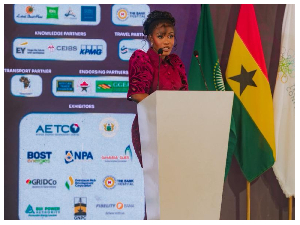 Emelia Cedar-Palm Akumah is the Founder and President of AETC






Entertainment