Ghana’s democracy, though young and vibrant, faces a growing threat that could undermine its very foundation. A dangerous narrative is emerging one that seeks to confine eligibility for the presidency to regional or tribal affiliations rather than the constitutional qualifications outlined in Article 62 of the 1992 Constitution.
If left unchecked, this trend risks metastasizing into a “cancerous democracy” a democracy poisoned by division and prejudice, threatening the unity and progress of the nation.
The metaphor of cancer uncontrolled, destructive growth aptly describes the creeping spread of ethnocentric sentiments from influential voices within both the National Democratic Congress (NDC) and the New Patriotic Party (NPP).
Though these remarks may appear isolated or harmless, they have the potential to fuel tribalism and sectionalism, gradually eroding the democratic values Ghana has worked tirelessly to build.
Article 62 of the 1992 Constitution clearly stipulates the qualifications for the presidency: a candidate must be a Ghanaian citizen by birth, at least 40 years old, and eligible to be a Member of Parliament (subject to specific disqualifications).
Nowhere does the Constitution mention ethnicity, tribe, religion, or regional origin as criteria for eligibility.
Yet, recent political discourse suggests otherwise. Some have begun advocating for an informal rotation of the presidency between northerners and southerners or limiting it to particular ethnic groups. This shift in rhetoric represents a dangerous departure from the constitutional principles that safeguard Ghana’s democracy.
The NPP has long been labeled an “Akan party” due to the dominance of Akan leaders within its ranks. However, the election of Dr Mahamudu Bawumia, a northerner, as the party’s presidential candidate for the 2024 elections marks a significant milestone.
Under President Nana Addo Dankwa Akufo-Addo’s leadership, this historic decision demonstrates a deliberate commitment to meritocracy over regional or ethnic loyalty.
Meanwhile, within the NDC, an unsettling narrative is gaining traction as the party looks ahead to the 2028 elections and the question of who might succeed President John Dramani Mahama. Some voices within the party argue that selecting another northerner would amount to “political suicide,” with the refrain “No way! Northerner go, northerner come” echoing through political circles.
This rhetoric is not only uninspiring but dangerously divisive it reduces leadership to geography rather than competence, experience, and vision.
This sentiment has unfairly targeted individuals like Haruna Iddrisu, Member of Parliament for Tamale South and Minister of Education. Despite his remarkable track record spanning his leadership of the National Union of Ghana Students (NUGS), his service as the NDC’s former Youth Organizer and his distinguished tenure in various cabinet positions some question his suitability for the presidency solely because he hails from the North.
It is important to note that Hon. Haruna has not even declared an intention to contest the 2028 elections. Yet, speculative discussions about his regional background risk inflaming unnecessary tensions and creating divisions that distract from the real issue competent leadership.
Such arguments are not only baseless but also deeply hypocritical. Where were these same voices when Alan John Kyerematen, an Ashanti, contested the NPP presidential primaries in 2007 to succeed President John Agyekum Kufuor, also an Ashanti? Why was there no similar outcry when the NDC’s 2007 primaries featured southerners like Prof Evans Atta Mills, Dr. Ekow Spio-Garbrah, and Eddie Annan, any of whom could have succeeded President Jerry John Rawlings, a southerner himself?
The contrast is telling. The silence then and the uproar now expose the inconsistency and selective application of regional arguments in our political discourse.
The preamble of the 1992 Constitution underscores Ghana’s commitment to “equality of opportunity” for all citizens, regardless of background. Allowing tribal or regional considerations to dominate political discussions not only undermines this constitutional guarantee but also endangers national cohesion.
If such divisive voices go unchallenged, they could spiral into uncontrollable territory—fueling ethnic and religious animosity and destabilizing the democratic gains Ghana has made since 1992.
Ghana’s strength lies in its diversity, and its democracy thrives when leadership is judged by competence, integrity, and vision not by tribe or region. As citizens, we must reject this cancerous narrative and defend the constitutional ideals that ensure every Ghanaian has an equal opportunity to serve.
Only by doing so can we preserve the blessings of liberty, unity, and prosperity for ourselves and generations yet unborn.
Opinions of Tuesday, 7 October 2025
Columnist: Abdul-Shakuru Zakaria
A Cancerous Threat to Ghana's Democracy: The danger of tribal and regional politics
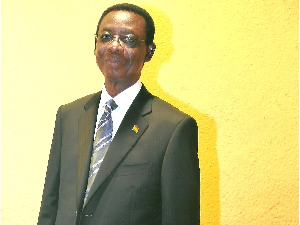
 Abdul-Shakuru Zakaria is the author of this article