General News of Thursday, 13 October 2022
Source: Jennifer Obeng-Mensah
Transforming Ghana’s Water Infrastructure: Sekyere Hemang wastewater treatment plant gets historic revamp

A quiet 2021 upgrade to Sekyere Hemang's wastewater plant sparked Ghana's sustainable water revolution. Led by visionary engineer Amoh Tontoh, this project revived a failing facility while setting a new West African standard for sustainable urban development.
Challenges of the Sekyere Hemang Wastewater Treatment Plant
Sekyere Hemang's outdated wastewater plant, built for a smaller population, buckled under urban growth, polluting the life-sustaining Achiase River. The contamination threatened fisheries, crops, and public health, while exposing Ghana's urgent national challenge: balancing water infrastructure development with ecosystem protection.
Designed and Engineering solutions
The Lead Engineer; Amoh Tontoh who is in charge of the plant design transformed the crisis into progress through engineering ingenuity and nature-based solutions.
His breakthrough solution and innovative design combined:
• Unprecedented scale: 13 million liters/day treatment capacity
• Smart purification: Advanced bioreactors target nitrogen/phosphorus to protect aquatic life
• Industrial-strength clarity: West Africa's largest clarifiers (31m) paired with hyper-efficient aeration
• Waste-to-resource innovation: Rotary sludge thickeners with cooling systems turn hazardous waste manageable
• Digital nervous system: Real-time SCADA/PLC controls that self-optimize treatment processes
• Ecosystem armor: Protected pipelines and groundwater shields defend the Achiase River
The facility that doesn't just process wastewater, it safeguards communities while setting new benchmarks for sustainable infrastructure in developing economies.
Wide replication of the project
The Sekyere Hemang model has become Ghana's wastewater blueprint, officially adopted by the Ghana Water Company as the national standard. Its innovations now inspire modular plants in space-constrained districts, while engineers nationwide replicate its eco-sensitive designs, especially near vulnerable rivers and wetlands. The project’s screw pumps, and protected piping systems have set a new norm for habitat-conscious infrastructure.
Impact of the project
The remarkable turnaround at Sekyere Hemang's wastewater treatment plant has become an environmental success story for Ghana. Just months after the upgraded facility began operations, the Achiase River - once heavily polluted - showed dramatic signs of recovery. Environmental monitoring confirmed the waterway was cleaner, fish stocks were rebounding, and aquatic ecosystems were healing. For local communities, the benefits were equally transformative. Cases of waterborne diseases plummeted, household water costs dropped, and businesses relying on the river saw improved operations. The project's innovative design, combining advanced treatment technology with ecological safeguards, has since been adopted as Ghana's national standard for wastewater management.
Sekyere Hemang's success proves that environmental protection and development can work hand-in-hand. What began as a solution for one community has become a blueprint for sustainable infrastructure across West Africa - showing how smart engineering can restore ecosystems while supporting growing populations. This is more than a technical achievement; it's a demonstration of how visionary water management can create healthier communities and more resilient environments.
Recognition and past project history
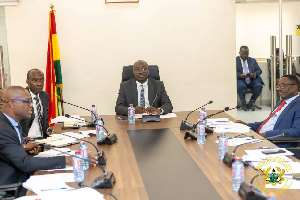
The Government of Ghana has formally recognized engineer; Amoh Tontoh for his groundbreaking work on the transformative Sekyere Hemang wastewater treatment plant. During an official engagement, the Minister of Environment, Science and Technology personally commended Mr. Tontoh's leadership in designing this sustainable infrastructure marvel.
"This innovative plant represents exactly the kind of forward-thinking solutions Ghana needs," stated the Minister. "We're profoundly grateful for this sustainable design that will serve our nation for generations. Now we call on all citizens to protect this investment through proper maintenance and use."
After pioneering the Barekese Pump Station's 50%-more-efficient design in 2021, the same Engineer; Amoh Tontoh was selected to spearhead the Ahwiaa Water Infrastructure Project in 2022 - back-to-back megaprojects demonstrating Ghana's commitment to his innovative, sustainable engineering approach. This landmark upgrade led by Amoh Tontoh transformed an aging facility into Africa's most innovative water project - boosting capacity to 18 MGD while slashing energy use by 50%. Its revolutionary park-integrated design overcame space constraints without service disruptions, saving municipalities $2.8M in land costs. The pioneering injection well system, now EPA-mandated, prevents 12 million liters of annual contamination. With 99.7% uptime and zero pipe bursts since commissioning, the project's full redundancy and pressure management systems have become national standards. KNUST teaches its methodologies, while Ghana Water Company mandates its designs - proving sustainable infrastructure can meet growing demand without compromising environmental protection. From inspiring legislation to training future engineers, Barekese's ripple effects continue to shape West Africa's water future.
The ministry also acknowledges the same Engineer’s work on Ahwiaa when he designed 4.15km trunk main along Mampong median, saving $68K+ and protecting community/trees. The engineer overcame tunnelled 41-inch pipe challenges via trenchless rehabilitation technology ensuring uninterrupted supply. Now a Ghana Water Company Limited, GWCL-endorsed model, it expanded water access to several communities while saving GHS 3 million – proving budget constraints needn't compromise sustainable infrastructure.
From Local Solution to National Legacy: How Sekyere Hemang Redefined Ghana's Infrastructure Future
The Sekyere Hemang wastewater project has become more than an engineering feat. It is now a national philosophy. Engineering students study its eco-conscious design, while policymakers cite it as proof that urbanization and environmental protection can coexist. International experts hail it as a replicable model for developing nations.
At its heart, the project represents a radical shift: infrastructure that heals rather than harms. As lead engineer Amoh Tontoh envisioned, it proved growth needn't come at nature's expense. Today, this once-local upgrade inspires a generation of African engineers and leaders—its ripples still spreading across the continent as a blueprint for sustainable development.
Author: Jennifer Obeng-Mensah